BIBLIO is the largest independent book marketplace in the world, with over 100 million books.

Skip to content

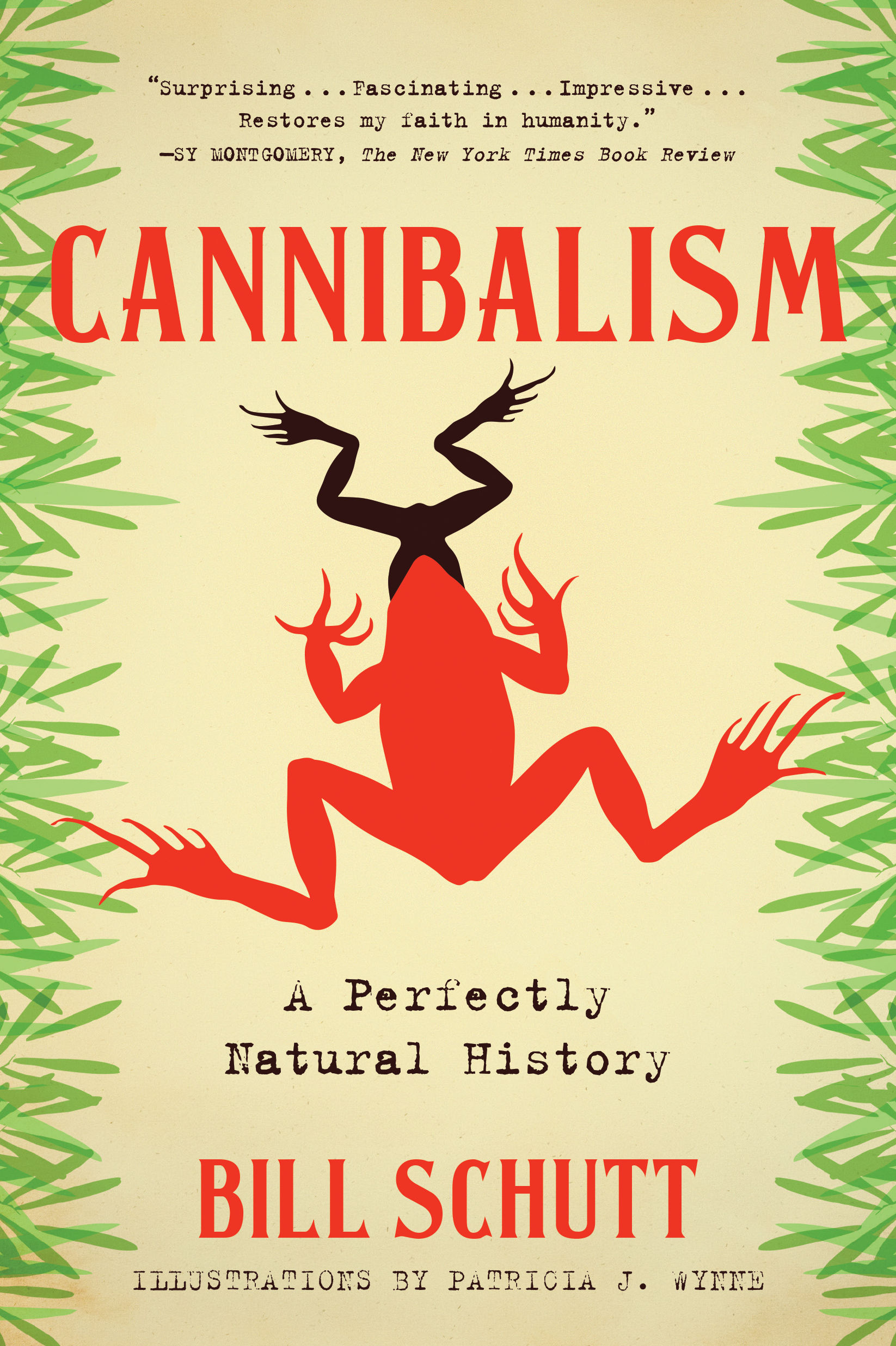
Cannibalism

Cannibalism

Cannibalism
Stock photo: cover may vary

Cannibalism Papeback -

by Bill Schutt

Add to wish list
  • New
New

Description

Workman Publishing Company, Incorporated , pp. 352 Reprint edition NO-PA16APR2015-KAP. Papeback. New.
Ask the seller a question Add to wish list
A$48.94
A$5.74 Delivery within USA
Standard delivery: 9 to 14 days
More delivery options
Ships from Cold Books (New York, United States)

Details

  • Title Cannibalism
  • Author Bill Schutt
  • Binding Papeback
  • Edition Reprint
  • Condition New
  • Pages 352
  • Volumes 1
  • Language ENG
  • Publisher Workman Publishing Company, Incorporated , Chapel Hill
  • Publication date pp. 352 Reprint edition NO-P
  • Features Bibliography
  • Bookseller's Inventory # 6384753819
  • ISBN 9781616207434 / 1616207434
  • Weight 0.8 lbs (0.36 kg)
  • Dimensions 8.2 x 5.5 x 1 in (20.83 x 13.97 x 2.54 cm)
  • Category Science
  • Library of Congress subjects Cannibalism
  • Dewey Decimal Code 394.909
  • Quantity available 1

About Cold Books New York, United States

Biblio member since 2012

Terms of Sale: 30 day return guarantee, with full refund including shipping costs for up to 30 days after delivery if an item arrives misdescribed or damaged.

Browse books from Cold Books

Reader reviews for Cannibalism

From the publisher

"Surprising. Impressive. Cannibalism restores my faith in humanity." --Sy Montgomery, The New York Times Book Review

For centuries scientists have written off cannibalism as a bizarre phenomenon with little biological significance. Its presence in nature was dismissed as a desperate response to starvation or other life-threatening circumstances, and few spent time studying it. A taboo subject in our culture, the behavior was portrayed mostly through horror movies or tabloids sensationalizing the crimes of real-life flesh-eaters. But the true nature of cannibalism--the role it plays in evolution as well as human history--is even more intriguing (and more normal) than the misconceptions we've come to accept as fact.

In Cannibalism: A Perfectly Natural History, zoologist Bill Schutt sets the record straight, debunking common myths and investigating our new understanding of cannibalism's role in biology, anthropology, and history in the most fascinating account yet written on this complex topic. Schutt takes readers from Arizona's Chiricahua Mountains, where he wades through ponds full of tadpoles devouring their siblings, to the Sierra Nevadas, where he joins researchers who are shedding new light on what happened to the Donner Party--the most infamous episode of cannibalism in American history. He even meets with an expert on the preparation and consumption of human placenta (and, yes, it goes well with Chianti).

Bringing together the latest cutting-edge science, Schutt answers questions such as why some amphibians consume their mother's skin; why certain insects bite the heads off their partners after sex; why, up until the end of the twentieth century, Europeans regularly ate human body parts as medical curatives; and how cannibalism might be linked to the extinction of the Neanderthals. He takes us into the future as well, investigating whether, as climate change causes famine, disease, and overcrowding, we may see more outbreaks of cannibalism in many more species--including our own.

Cannibalism places a perfectly natural occurrence into a vital new context and invites us to explore why it both enthralls and repels us.

About the author

Bill Schutt is a professor of biology at LIU Post and a research associate in residence at the American Museum of Natural History. His first book, Dark Banquet: Blood and the Curious Lives of Blood-Feeding Creatures, was selected as a Best Book of 2008 by Library Journal and Amazon and was chosen for the Barnes & Noble Discover Great New Writers program. Born in New York City and raised on Long Island by parents who encouraged his love for turning over stones and peering under logs, Schutt quickly grew a passion for the natural world, with its enormous wonders and its increasing vulnerability. He received his PhD in zoology from Cornell and has published over two dozen peer-reviewed articles on topics ranging from terrestrial locomotion in vampire bats to the precarious, arboreal copulatory behavior of a marsupial mouse. His research has been featured in Natural History magazine as well as the New York Times, Newsday, the Economist, and Discover magazine. He was recently reelected to the board of directors of the North American Society for Bat Research. Schutt lives on the East End of Long Island with his wife and son.

This author is represented by the Hachette Speakers Bureau.

tracking-