
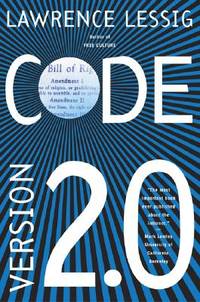
Stock photo: cover may vary
Code: And Other Laws of Cyberspace, Version 2.0 Paperback - 2006
by Lessig, Lawrence
- Used
- Good
- Paperback
A$15.06
Free Delivery to USA
Standard delivery: 7 to 10 days
More delivery options
Standard delivery: 7 to 10 days
Dropship order
Ships from Ausvora INC (Connecticut, United States)
Details
- Title Code: And Other Laws of Cyberspace, Version 2.0
- Author Lessig, Lawrence
- Binding Paperback
- Edition 2nd Revised ed.
- Condition Used - Good
- Pages 432
- Volumes 1
- Language ENG
- Publisher Basic Books, New York
- Publication date 2006-12-01
- Illustrated Yes
- Features Bibliography, Illustrated, Index
- Bookseller's Inventory # ANAIS-0465039146
- ISBN 9780465039142 / 0465039146
- Weight 1.17 lbs (0.53 kg)
- Dimensions 9.28 x 6.12 x 1.12 in (23.57 x 15.54 x 2.84 cm)
- Size 6.2x1.1x9.3
- Category Computers - General Information
- Library of Congress subjects Privacy, Right of, Freedom of information
- Dewey Decimal Code 303.483
- Quantity available 1
About Ausvora INC Connecticut, United States
Biblio member since 2025
We are a U.S.-based online bookstore specializing in quality used books at affordable prices. With over 1 million books in stock, we serve readers, resellers, libraries, and institutions across the United States and internationally.
Fast & Reliable Shipping All orders ship within 1–2 business days. Domestic shipping across the U.S. via USPS or UPS. International shipping available to most countries. 🔁 30-Day Hassle-Free Returns If the book isn't as described, we'll make it right. Enjoy a full 30-day return window with no questions asked.
Summary
Although the book is named Code and Other Laws of Cyberspace, Lessig uses this theme sparingly. It is a fairly simple concept: since cyberspace is entirely human-made, there are no natural laws to determine its architecture. While we tend to assume that what is in cyberspace is a given, in fact everything there is a construction based on decisions made by people. What we can and can't do there is governed by the underlying code of all of the programs that make up the Internet, which both permit and restrict. So while the libertarians among us rail against the idea of government, our freedoms in cyberspace are being determined by an invisible structure that is every bit as restricting as any laws that can come out of a legislature, legitimate or not. Even more important, this invisible code has been written by people we did not elect and who have no formal obligations to us, such as the members of the Internet Engineering Task Force (IETF) or the more recently-developed Internet Corporation for Assigned Names and Numbers (ICANN). It follows that what we will be able to do in the future will be determined by code that will be written tomorrow, and we should be thinking about who will determine what this code will be. [from http://kcoyle.net/lessig.html]
Reader reviews for Code: And Other Laws of Cyberspace, Version 2.0
Write a review for this book
Important Terms and Guidelines
- Please focus on the book’s content and context. Also, add any personal comments as to how you enjoyed the book. Substantiate your likes and dislikes. You may make comparisons to other books.
- Reviews must be at least 140 characters in length.
- Please do not reveal critical plot elements.
- This is not a help line. Contact customer support if you need help.
Your review must not include:
- Obscenities, discriminatory language, or other insulting language not suitable for public domain
- Advertisements, “spam” content, or references to other products, offers or websites.
- Email addresses, URLs, phone numbers, physical addresses or other contact information.
- Overly critical comments about other reviews or reviewers
- Time-sensitive material (i.e. promotional tours, seminars, lectures, etc.)
- Availability, price, or alternative ordering/shipping information
From the publisher
Media reviews
Citations
- Library Journal, 01/01/2007, Page 126

