
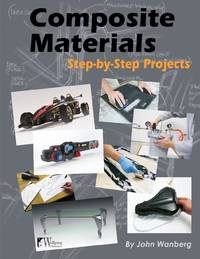
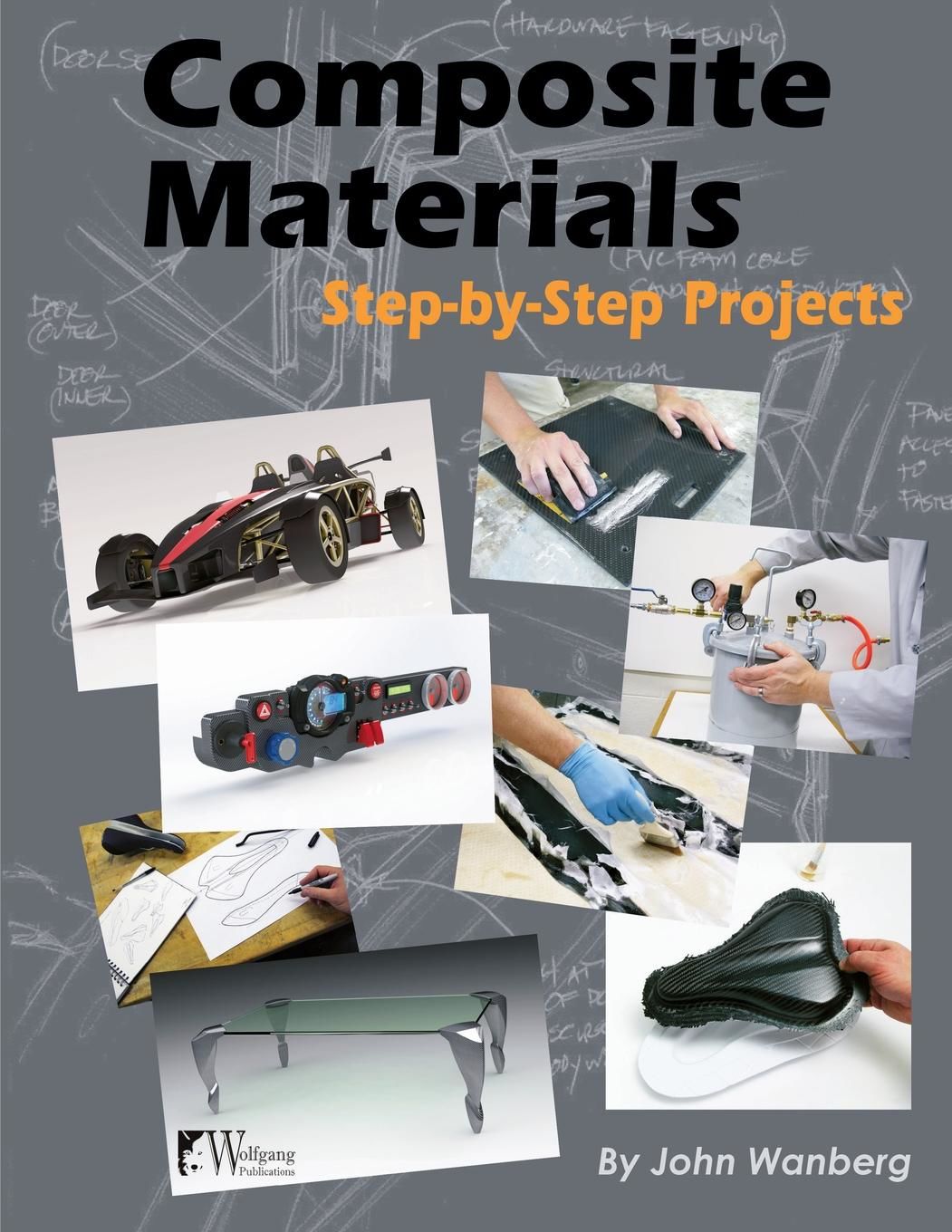
Composite Materials: Step-By-Step Projects Paperback - 2014
by John Wanberg
- New
- Paperback
A$61.77
A$15.60
Delivery to USA
Standard delivery: 7 to 12 days
More delivery options
Standard delivery: 7 to 12 days
Ships from Ria Christie Collections (Greater London, United Kingdom)
Details
- Title Composite Materials: Step-By-Step Projects
- Author John Wanberg
- Binding Paperback
- Condition New
- Pages 144
- Volumes 1
- Language ENG
- Publisher Wolfgang Publications
- Publication date 2014-08-15
- Illustrated Yes
- Features Illustrated
- Bookseller's Inventory # ria9781929133369_inp
- ISBN 9781929133369 / 1929133367
- Weight 0.85 lbs (0.39 kg)
- Dimensions 10.8 x 8.5 x 0.4 in (27.43 x 21.59 x 1.02 cm)
- Category Automotive
- Library of Congress subjects Composite materials, Product engineering
- Dewey Decimal Code 620.118
- Quantity available 420
About Ria Christie Collections Greater London, United Kingdom
Biblio member since 2014
Hello We are professional online booksellers. We sell mostly new books and textbooks and we do our best to provide a competitive price. We are based in Greater London, UK. We pride ourselves by providing a good customer service throughout, shipping the items quickly and replying to customer queries promptly. Ria Christie Collections
30 day return guarantee, with full refund including original shipping costs for up to 30 days after delivery if an item arrives misdescribed or damaged.
Reader reviews for Composite Materials: Step-By-Step Projects
Write a review for this book
Important Terms and Guidelines
- Please focus on the book’s content and context. Also, add any personal comments as to how you enjoyed the book. Substantiate your likes and dislikes. You may make comparisons to other books.
- Reviews must be at least 140 characters in length.
- Please do not reveal critical plot elements.
- This is not a help line. Contact customer support if you need help.
Your review must not include:
- Obscenities, discriminatory language, or other insulting language not suitable for public domain
- Advertisements, “spam” content, or references to other products, offers or websites.
- Email addresses, URLs, phone numbers, physical addresses or other contact information.
- Overly critical comments about other reviews or reviewers
- Time-sensitive material (i.e. promotional tours, seminars, lectures, etc.)
- Availability, price, or alternative ordering/shipping information
From the publisher
From the jacket flap
In books one through three, Author and Professor John Wanberg, took pains to explain the why and how of building with composite materials. Each page was allocated nearly fifty-fifty between photos and text.
In this new book of step-by-step projects, John takes a different approach. Instead of explaining the theory and what each component is made of, John cuts to the chase. Nearly every page is allocated to photos.
The pictures lead the reader through a detailed how-to sequence. From making the mold, to cutting the fabric, and finishing the part, all the information is here. Projects include everything from fabricating speaker enclosures to hood scoops and cell-phone cases. Some require only simple molds, while others rely on more sophisticated vacuum bagging methods.
Each chapter starts with copy, just enough to explain the project and the goals. Next comes the material panel, a list of all the tools and materials needed to duplicate the project seen in that particular chapter. Finally, the vast majority of each chapter is given over to the how-to photos. Photos that show, literally, each step along the way, from the initial sketch to the finished part.

