BIBLIO is the largest independent book marketplace in the world, with over 100 million books.

Skip to content

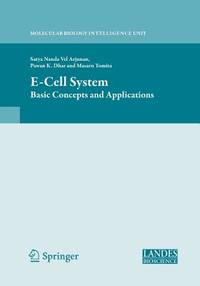
E‑Cell System: Basic Concepts and Applications (Molecular Biology Intelligence Unit, 118)

E‑Cell System: Basic Concepts and Applications (Molecular Biology Intelligence Unit, 118)

E‑Cell System: Basic Concepts and Applications (Molecular Biology Intelligence
Stock photo: cover may vary

E‑Cell System: Basic Concepts and Applications (Molecular Biology Intelligence Unit, 118) Papeback -

by Satya Nanda Arjunan (Editor); Pawan K. Dhar (Editor); Masaru Tomita (Editor)

Add to wish list
  • New
New

Description

Springer , pp. 193 . Papeback. New.
Ask the seller a question Add to wish list
A$261.31
A$5.83 Delivery within USA
Standard delivery: 9 to 14 days
More delivery options
Ships from Cold Books (New York, United States)

Details

  • Title E‑Cell System: Basic Concepts and Applications (Molecular Biology Intelligence Unit, 118)
  • Author Satya Nanda Arjunan (Editor); Pawan K. Dhar (Editor); Masaru Tomita (Editor)
  • Binding Papeback
  • Condition New
  • Pages 179
  • Volumes 1
  • Language ENG
  • Publisher Springer
  • Publication date pp. 193
  • Illustrated Yes
  • Features Illustrated
  • Bookseller's Inventory # 6381832921
  • ISBN 9781493947614 / 1493947613
  • Weight 0.77 lbs (0.35 kg)
  • Dimensions 10 x 7 x 0.42 in (25.40 x 17.78 x 1.07 cm)
  • Themes
    • Aspects (Academic): Science/Technology Aspects
  • Category Medical / Nursing
  • Dewey Decimal Code 572
  • Quantity available 4

About Cold Books New York, United States

Biblio member since 2012

Terms of Sale: 30 day return guarantee, with full refund including shipping costs for up to 30 days after delivery if an item arrives misdescribed or damaged.

Browse books from Cold Books

Reader reviews for E‑Cell System: Basic Concepts and Applications (Molecular Biology Intelligence Unit, 118)

From the publisher

The interdisciplinary field of molecular systems biology aims to understand the behavior and mechanisms of biological processes composed of individual molecular components. As we gain more qualitative and quantitative information of complex intracellular processes, biochemical modeling and simulation become indispensable not only to uncover the molecular mechanisms of the processes, but to perform useful predictions. To this end, the E-Cell System, a multi-algorithm, multi-timescale object-oriented simulation platform, can be used to construct predictive virtual biological systems. Gene regulatory and biochemical networks that constitute a sub- or a whole cellular system can be constructed using the E-Cell System to perform qualitative and quantitative analyses. The purpose of E-Cell System: Basic Concepts and Applications is to provide a comprehensive guide for the E-Cell System version 3 in terms of the software features and its usage. While the publicly available E-Cell Simulation Environment version 3 User's Manual provides the technical details of model building and scripting, it does not describe some of the underlying concepts of the E-Cell System. The first part of the book addresses this issue by providing the basic concepts of modeling and simulation with the E-Cell System.

About the author

Satya Arjunan is a Postdoctoral Researcher at the RIKEN Quantitative Biology Center, Japan. He received his PhD in Systems Biology from Keio University (2009), BEng in Electronics Engineering (2000) and MSc (2003) in Computer Science from Universiti Teknologi Malaysia. He is also the recipient of the Texas Instruments Malaysia Scholarship (1997) and the Monbukagakusho Scholarship (2003). As part of his PhD work, he developed a multicompartmental spatiotemporal stochastic simulation method, called Spatiocyte, with applications in molecular systems biology.

Pawan K. Dhar is the Director of the Centre of Systems and Synthetic Biology, University of Kerala. Prior to this he held senior scientific positions at RIKEN Genomics Sciences Centre, Japan, Bioinformatics Institute, Singapore and the E-Cell group, Keio University in Japan and Manipal University. One of his key recent contributions has been to make functional proteins from non-coding genome. Dr. Dhar is the Founding Editor-in-Chief of the Springer's System and Synthetic Biology Journal. Dr. Dhar heads active research programs on synthetic proteins, virtual cell and BioCAD platform.

Masaru Tomita is a Professor and the Director General of the Institute for Advanced Biosciences, Keio University. He received PhD in Computer Science from Carnegie Mellon University (1985), PhD in Electrical Engineering from Kyoto University (1994) and PhD in Molecular Biology from Keio University (1998). He is a recipient of Presidential Young Investigators Award from National Science Foundation of USA (1988) and various other awards. His current research field includes Systems Biology, Metabolomics, and Computational Biology.

tracking-