BIBLIO is the largest independent book marketplace in the world, with over 100 million books.

Skip to content

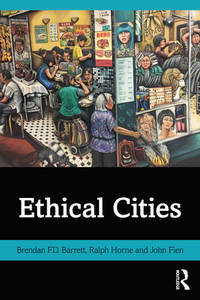
Ethical Cities

Ethical Cities

Ethical Cities
Stock photo: cover may vary

Ethical Cities Papeback -

by Brendan F. Barrett; Ralph Horne; John Fien

Add to wish list
  • New
New

Description

pp. 208 . Papeback. New.
Ask the seller a question Add to wish list
A$111.52
A$5.74 Delivery within USA
Standard delivery: 9 to 14 days
More delivery options
Ships from Cold Books (New York, United States)

Details

  • Title Ethical Cities
  • Author Brendan F. Barrett; Ralph Horne; John Fien
  • Binding Papeback
  • Condition New
  • Pages 200
  • Volumes 1
  • Language ENG
  • Publisher Routledge
  • Publication date pp. 208
  • Illustrated Yes
  • Features Bibliography, Illustrated, Index, Maps
  • Bookseller's Inventory # 6382853064
  • ISBN 9780367482848 / 0367482843
  • Weight 1 lbs (0.45 kg)
  • Dimensions 9.1 x 6.1 x 0.6 in (23.11 x 15.49 x 1.52 cm)
  • Themes
    • Demographic Orientation: Urban
  • Category Politics / Current Events
  • Library of Congress subjects Social justice, Sustainable urban development
  • Library of Congress Catalogue Number 2020028944
  • Dewey Decimal Code 307.121
  • Quantity available 4

About Cold Books New York, United States

Biblio member since 2012

Terms of Sale: 30 day return guarantee, with full refund including shipping costs for up to 30 days after delivery if an item arrives misdescribed or damaged.

Browse books from Cold Books

Reader reviews for Ethical Cities

From the publisher

Combining elements of sustainable and resilient cities agendas, together with those from social justice studies, and incorporating concerns about good governance, transparency and accountability, the book presents a coherent conceptual framework for the ethical city, in which to embed existing and new activities within cities so as to guide local action.

The authors' observations are derived from city-specific surveys and urban case studies. These reveal how progressive cities are promoting a diverse range of ethically informed approaches to urbanism, such as community wealth building, basic income initiatives, participatory budgeting and citizen assemblies. The text argues that the ethical city is a logical next step for critical urbanism in the era of late capitalism, characterised by divisive politics, burgeoning inequality, widespread technology-induced disruptions to every aspect of modern life and existential threats posed by climate change, sustainability imperatives and pandemics. Engaging with their communities in meaningful ways and promoting positive transformative change, ethical cities are well placed to deliver liveable and sustainable places for all, rather than only for wealthy elites. Likewise, the aftermath of shocks such as the 2008 Global Financial Crisis and the Covid-19 pandemic reveals that cities that are not purposeful in addressing inequalities, social problems, unsustainability and corruption face deepening difficulties.

Readers from across physical and social sciences, humanities and arts, as well as across policy, business and civil society, will find that the application of ethical principles is key to the pursuit of socially inclusive urban futures and the potential for cities and their communities to emerge from or, at least, ameliorate a diverse range of local, national and global challenges.

About the author

Brendan F.D. Barrett (FRSA) is Specially Appointed Professor in the Center for the Study of Co* Design, Osaka University, Japan. He has worked in academia and environmental consultancy in the UK, Japan and Australia and as an official with UNEP and the United Nations University.

Ralph Horne is Professor of Geography and Deputy Pro-Vice Chancellor, Research and Innovation for the College of Design and Social Context at RMIT University, Australia. He combines research leadership and participation in research projects concerning the environmental, social and policy context of production and consumption in the urban environment.

John Fien is Professor of Practice in the School of Architecture and Urban Design at RMIT University, Australia. With an academic career spanning four decades, he was previously Executive Director and Professor at the Swinburne Leadership Institute, Professor of Sustainability at RMIT University and Professor of Environmental Education at Griffith University.

tracking-