BIBLIO is the largest independent book marketplace in the world, with over 100 million books.

Skip to content

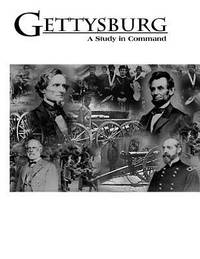
Gettysburg: A Study in Command

Gettysburg: A Study in Command

Gettysburg: A Study in Command
Stock photo: cover may vary

Gettysburg: A Study in Command Paperback - 2014

by U.S. Army War College

Add to wish list
  • Used
  • Good
  • Paperback
Used - Good

Description

paperback. Good. Access codes and supplements are not guaranteed with used items. May be an ex-library book.
Ask the seller a question Add to wish list
A$53.35
Free Delivery within USA
Standard delivery: 7 to 14 days
More delivery options
Dropship order
Ships from Bonita (California, United States)

Details

  • Title Gettysburg: A Study in Command
  • Author U.S. Army War College
  • Binding Paperback
  • Condition Used - Good
  • Pages 50
  • Volumes 1
  • Language ENG
  • Publisher Createspace Independent Publishing Platform
  • Publication date 2014-12-02
  • Bookseller's Inventory # 1505318882.G
  • ISBN 9781505318883 / 1505318882
  • Weight 0.31 lbs (0.14 kg)
  • Dimensions 11.02 x 8.5 x 0.1 in (27.99 x 21.59 x 0.25 cm)
  • Themes
    • Chronological Period: 1851-1899
    • Topical: Civil War
  • Category History - Military / War
  • Quantity available 1

About Bonita California, United States

Biblio member since 2020

Terms of Sale: 30 day return guarantee, with full refund including original shipping costs for up to 30 days after delivery if an item arrives misdescribed or damaged.

Browse books from Bonita

Reader reviews for Gettysburg: A Study in Command

From the publisher

Secretary of War Elihu Root, during his speech at the dedication of the first Army War College, charged the institution with its enduring mission. War College graduates, he said, should be educated in the skills that would enable them -to preserve peace by intelligent and adequate preparation and, if called upon, be fully capable of applying their education -to repel aggression. Attainment of these ends would be achieved -through studying and conferring on the great problems of national defense, military science and responsible command. Thoughtful study on war, the ultimate application of military force to achieve political ends, is normally undertaken in an academic setting, such as in the seminar room. One may also consider war in all its complexity on the great battlefields of history, where in a few hours or days and in the confines of several square miles, issues of policy and strategy, operations and tactics were contested by armies, ably or poorly led.Thoughtful and informed discussions about the battle of Gettysburg, a discrete tactical event embedded within a campaign, can lead to insights on the complexities associated with the employment of military power to achieve strategic ends. General Robert E. Lee, in this instance, sought to secure independence for the Confederacy by winning a military victory in Pennsylvania, which would in turn, lead to a favorable political settlement of the war. His opponent, General George G. Meade, sought to prevent this, and in so doing to preserve the Union. As tactical and operational decisions were made throughout the battle and campaign, the political ends for which the Civil War was being fought shaped and determined decisions at all levels of war. We can benefit from studying the Gettysburg Campaign by carefully and thoughtfully examining decisions made by the respective political leaders directing the war, and those of field commanders directing actions on the battlefield. Armed with even a limited knowledge of the personalities involved and the conditions extant on the field, we can arrive at informed judgments on the thinking that was done and the decisions that were made affecting the outcome of the battle. Critical thinking, in other words, is the order of the day.Carl von Clausewitz, the 19th century Prussian military theorist, reminds us that when engaged in critical thinking one must not only find fault with what was done, but one must also propose alternatives not taken, and these too must be rigorously examined. What better course of action could have been taken? If the best course of action was the one executed, why did it succeed, or fail?
tracking-