BIBLIO is the largest independent book marketplace in the world, with over 100 million books.

Skip to content

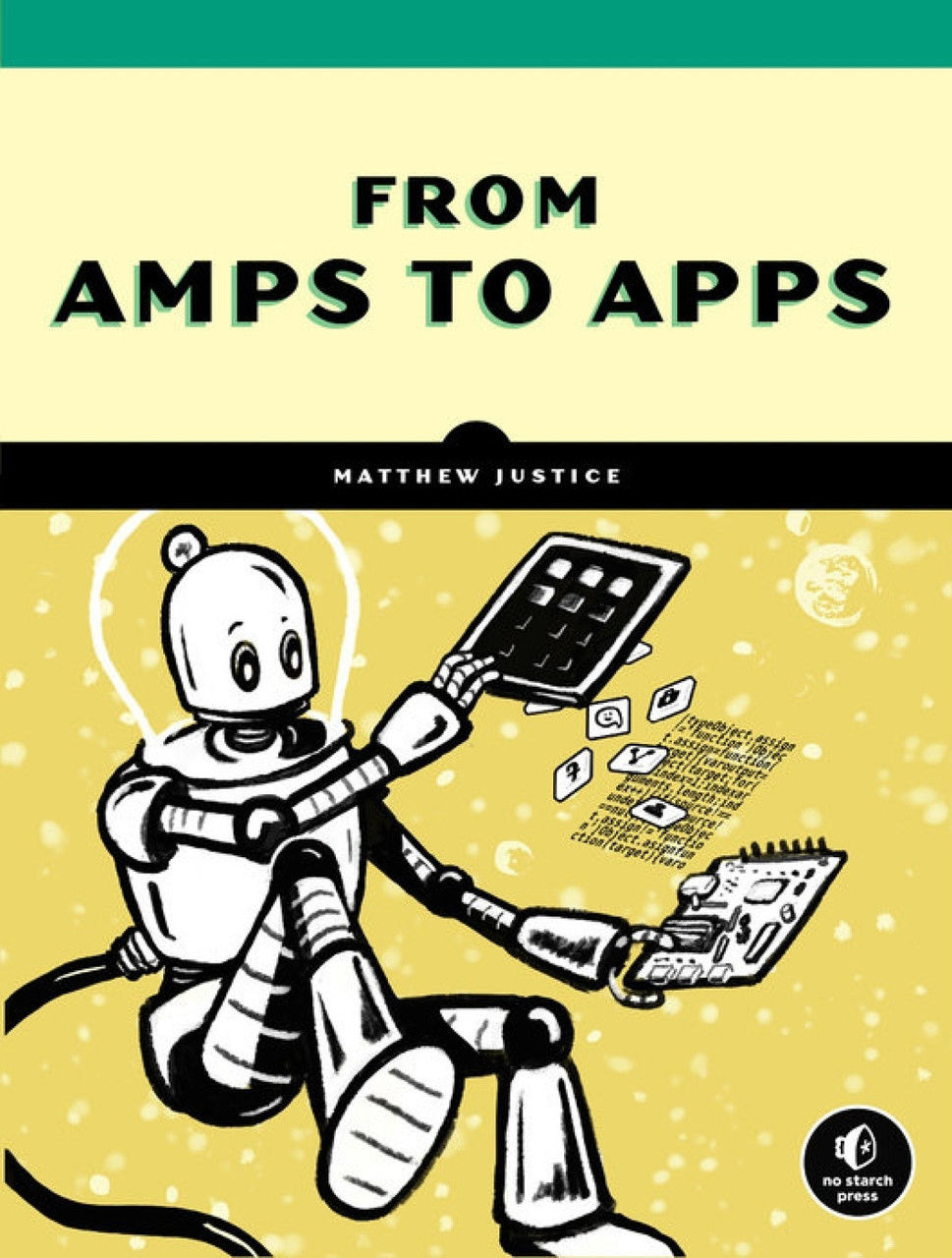
How Computers Really Work: A Hands-On Guide to the Inner Workings of the Machine

How Computers Really Work: A Hands-On Guide to the Inner Workings of the Machine

How Computers Really Work: A Hands-On Guide to the Inner Workings of the Machine Paperback / softback -

by Matthew Justice

Add to wish list
  • New
  • Paperback
New

Description

Paperback / softback. New. An approachable, hands-on guide to understanding how computers work, from low-level circuits to modern software.
Ask the seller a question Add to wish list
A$56.78
A$19.40 Delivery to USA
Standard delivery: 14 to 21 days
More delivery options
Ships from The Saint Bookstore (Merseyside, United Kingdom)

Details

  • Title How Computers Really Work: A Hands-On Guide to the Inner Workings of the Machine
  • Author Matthew Justice
  • Binding Paperback
  • Condition New
  • Pages 392
  • Volumes 1
  • Language ENG
  • Publisher No Starch Press
  • Illustrated Yes
  • Features Illustrated, Index
  • Bookseller's Inventory # A9781718500662
  • ISBN 9781718500662 / 1718500661
  • Weight 1.6 lbs (0.73 kg)
  • Dimensions 9.1 x 6.9 x 1.2 in (23.11 x 17.53 x 3.05 cm)
  • Category Computers - General Information
  • Library of Congress subjects Electronic digital computers
  • Library of Congress Catalogue Number 2020024168
  • Dewey Decimal Code 004
  • Quantity available 6

About The Saint Bookstore Merseyside, United Kingdom

Biblio member since 2018

The Saint Bookstore specialises in hard to find titles & also offers delivery worldwide for reasonable rates.

Terms of Sale: Refunds or Returns: A full refund of the price paid will be given if returned within 30 days in undamaged condition. If the product is faulty, we may send a replacement.

Browse books from The Saint Bookstore

Reader reviews for How Computers Really Work: A Hands-On Guide to the Inner Workings of the Machine

From the publisher

An approachable, hands-on guide to understanding how computers work, from low-level circuits to high-level code.

How Computers Really Work is a hands-on guide to the computing ecosystem: everything from circuits to memory and clock signals, machine code, programming languages, operating systems, and the internet.

But you won't just read about these concepts, you'll test your knowledge with exercises, and practice what you learn with 41 optional hands-on projects. Build digital circuits, craft a guessing game, convert decimal numbers to binary, examine virtual memory usage, run your own web server, and more.

Explore concepts like how to:

  • Think like a software engineer as you use data to describe a real world concept
  • Use Ohm's and Kirchhoff's laws to analyze an electrical circuit
  • Think like a computer as you practice binary addition and execute a program in your mind, step-by-step

  • The book's projects will have you translate your learning into action, as you:
  • Learn how to use a multimeter to measure resistance, current, and voltage
  • Build a half adder to see how logical operations in hardware can be combined to perform useful functions
  • Write a program in assembly language, then examine the resulting machine code
  • Learn to use a debugger, disassemble code, and hack a program to change its behavior without changing the source code
  • Use a port scanner to see which internet ports your computer has open
  • Run your own server and get a solid crash course on how the web works

  • And since a picture is worth a thousand bytes, chapters are filled with detailed diagrams and illustrations to help clarify technical complexities.

    Requirements: The projects require a variety of hardware - electronics projects need a breadboard, power supply, and various circuit components; software projects are performed on a Raspberry Pi. Appendix B contains a complete list. Even if you skip the projects, the book's major concepts are clearly presented in the main text.

    About the author

    Matthew Justice, a software engineer, spent 17 years at Microsoft where his work included debugging the Windows kernel, developing automated fixes, and leading a team of engineers building diagnostic tools and services. He has worked on everything from low-level software to high-level web applications.
    tracking-