
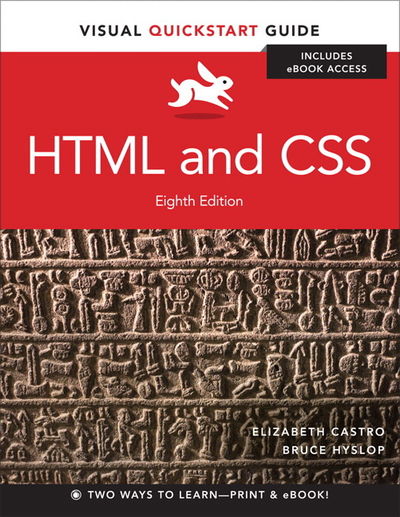
Stock photo: cover may vary
HTML and CSS: Visual QuickStart Guide Paperback - 2013
by Castro, Elizabeth; Hyslop, Bruce
- Used
- Good
- Paperback
A$8.58
Free Delivery within USA
Standard delivery: 4 to 8 days
More delivery options
Standard delivery: 4 to 8 days
Ships from Your Online Bookstore (Texas, United States)
Details
- Title HTML and CSS: Visual QuickStart Guide
- Author Castro, Elizabeth; Hyslop, Bruce
- Binding Paperback
- Edition International Ed
- Condition Used - Good
- Pages 549
- Volumes 1
- Language ENG
- Publisher Peachpit Press
- Publication date 2013-08-09
- Illustrated Yes
- Bookseller's Inventory # 0321928830-3-27211813
- ISBN 9780321928832 / 0321928830
- Weight 22.9 lbs (10.39 kg)
- Dimensions 8.95 x 7 x 1.2 in (22.73 x 17.78 x 3.05 cm)
- Size 112x19x143
- Category Computers - Languages / Programming
- Library of Congress subjects Web sites - Design, HTML (Document markup language)
- Dewey Decimal Code 006.74
- Quantity available 1
About Your Online Bookstore Texas, United States
Biblio member since 2012
We provide a 30 day return guarantee, with full refund including shipping costs for up to 30 days after delivery if an item arrives damaged or not as it was described in the listing.
Reader reviews for HTML and CSS: Visual QuickStart Guide
Write a review for this book
Important Terms and Guidelines
- Please focus on the book’s content and context. Also, add any personal comments as to how you enjoyed the book. Substantiate your likes and dislikes. You may make comparisons to other books.
- Reviews must be at least 140 characters in length.
- Please do not reveal critical plot elements.
- This is not a help line. Contact customer support if you need help.
Your review must not include:
- Obscenities, discriminatory language, or other insulting language not suitable for public domain
- Advertisements, “spam” content, or references to other products, offers or websites.
- Email addresses, URLs, phone numbers, physical addresses or other contact information.
- Overly critical comments about other reviews or reviewers
- Time-sensitive material (i.e. promotional tours, seminars, lectures, etc.)
- Availability, price, or alternative ordering/shipping information

