BIBLIO is the largest independent book marketplace in the world, with over 100 million books.

Skip to content

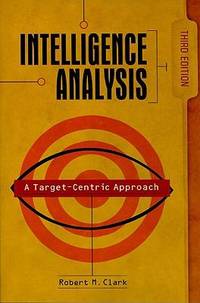
Intelligence Analysis: A Target-Centric Approach

Intelligence Analysis: A Target-Centric Approach

Intelligence Analysis: A Target-Centric Approach Paperback - 2009

by Clark, Robert M

Add to wish list
  • Used
  • Good
  • Paperback
Used - Good

Description

CQ Press, 2009. Paperback. Good. Pages can have notes/highlighting. Spine may show signs of wear. ~ ThriftBooks: Read More, Spend Less.Dust jacket quality is not guaranteed.
Ask the seller a question Add to wish list
A$12.33
Free Delivery within USA
Standard delivery: 4 to 8 days
More delivery options
Ships from ThriftBooks (Washington, United States)

Details

  • Title Intelligence Analysis: A Target-Centric Approach
  • Author Clark, Robert M
  • Binding Paperback
  • Edition [ Edition: third
  • Condition Used - Good
  • Pages 309
  • Volumes 1
  • Language ENG
  • Publisher CQ Press, Washington
  • Publication date 2009
  • Illustrated Yes
  • Bookseller's Inventory # G1604265434I3N00
  • ISBN 9781604265439 / 1604265434
  • Weight 2.99 lbs (1.36 kg)
  • Dimensions 8.9 x 6 x 0.9 in (22.61 x 15.24 x 2.29 cm)
  • Category Politics / Current Events
  • Library of Congress subjects Intelligence service - Methodology
  • Library of Congress Catalogue Number 2009026772
  • Dewey Decimal Code 327.12
  • Quantity available 1

About ThriftBooks Washington, United States

Biblio member since 2018

From the largest selection of used titles, we put quality, affordable books into the hands of readers

Terms of Sale: 30 day return guarantee, with full refund including original shipping costs for up to 30 days after delivery if an item arrives misdescribed or damaged.

Browse books from ThriftBooks

Reader reviews for Intelligence Analysis: A Target-Centric Approach

From the publisher

As America's enemies have changed and evolved, the American intelligence community has been forced to find more effective methods of managing intelligence analysis. Old hierarchical models of collection and analysis must give way to horizontal, networked solutions. In Intelligence Analysis, Robert M. Clark explains that a collaborative, target-centric approach allows for more effective analysis, while better meeting customer needs.

The new third edition has been comprehensively revised to reflect changes in the constantly shifting landscape of intelligence. With new examples throughout, Intelligence Analysis now includes discussions of framing effects, human terrain models, cyber collection, computer network exploitation, and more. Further, a new section on the "defense analysis challenge" clarifies the relationship between the analyst and the customer. Once again, Clark has updated the practical information and day-to-day details as only an experienced hand could, bringing essential clarity and insight to this "must-have" resource.

About the author

Robert M. Clark has more than five decades of U.S. intelligence community experience. A USAF lieutenant colonel (retired), Dr. Clark served as an electronics warfare officer and intelligence officer. At the CIA, he was a senior analyst and group chief responsible for developing analytic methodologies. He was cofounder and CEO of the Scientific and Technical Analysis Corporation, a privately held company serving the U.S. intelligence community. Clark holds an SB from MIT, a PhD in electrical engineering from the University of Illinois, and a JD from George Washington University. Beyond analyzing wicked intelligence issues, his passion is writing on the topic of intelligence. His books include Intelligence Analysis: A Target-Centric Approach (5th edition, 2016), The Technical Collection of Intelligence (2010), and Intelligence Collection (2014). He is coauthor, with Dr. William Mitchell, of Target-Centric Network Modeling (2015) and Deception: Counterdeception and Counterintelligence (2019); and coeditor, with Dr. Mark Lowenthal, of Intelligence Collection: The Five Disciplines (2015). Dr. Clark also develops and teaches courses for audiences in academia, national intelligence, and the military. He currently serves as an adjunct professor at the Johns Hopkins University teaching graduate courses.


tracking-