
Stock photo: cover may vary
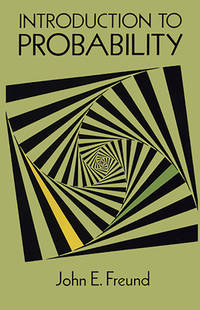
Introduction to Probability Paperback - 1993
by Freund, John E
- Used
Lucid, well-written chapters introduce the reader to the concept of possibilities, including combinations and permutations; probabilities; expectations; the law of large numbers, including Chebyshev's theorem; and more. Numerous exercises throughout reinforce the methods and ideas explained. The volume demonstrates that the study of probability can be fun, challenging, and relevant.
A$11.58
Free Delivery within USA
Standard delivery: 4 to 8 days
More delivery options
Standard delivery: 4 to 8 days
Details
- Title Introduction to Probability
- Author Freund, John E
- Binding Paperback
- Edition Reprint
- Condition Used - Very good
- Pages 272
- Volumes 1
- Language ENG
- Publisher Dover Publications, Incorporated, Mineola, New York, U.S.A.
- Publication date 1993-05
- Illustrated Yes
- Features Bibliography, Illustrated, Index
- Bookseller's Inventory # 4765124-6
- ISBN 9780486675497 / 0486675491
- Weight 0.64 lbs (0.29 kg)
- Dimensions 8.64 x 5.4 x 0.54 in (21.95 x 13.72 x 1.37 cm)
- Category Mathematics
- Library of Congress subjects Probabilities
- Library of Congress Catalogue Number 93009358
- Dewey Decimal Code 519.2
- Quantity available 1
About Better World Books Indiana, United States
Biblio member since 2005

Better World Books is a for-profit, socially conscious business and a global online bookseller that collects and sells new and used books online, matching each purchase with a book donation. Each sale generates funds for literacy and education initiatives in the U.S., the UK, and around the world. Since its launch in 2003, Better World Books has raised over $35 million for libraries and literacy, donated over 38 million books, and reused or recycled more than 475 million books.
Reader reviews for Introduction to Probability
Write a review for this book
Important Terms and Guidelines
- Please focus on the book’s content and context. Also, add any personal comments as to how you enjoyed the book. Substantiate your likes and dislikes. You may make comparisons to other books.
- Reviews must be at least 140 characters in length.
- Please do not reveal critical plot elements.
- This is not a help line. Contact customer support if you need help.
Your review must not include:
- Obscenities, discriminatory language, or other insulting language not suitable for public domain
- Advertisements, “spam” content, or references to other products, offers or websites.
- Email addresses, URLs, phone numbers, physical addresses or other contact information.
- Overly critical comments about other reviews or reviewers
- Time-sensitive material (i.e. promotional tours, seminars, lectures, etc.)
- Availability, price, or alternative ordering/shipping information

