BIBLIO is the largest independent book marketplace in the world, with over 100 million books.

Skip to content

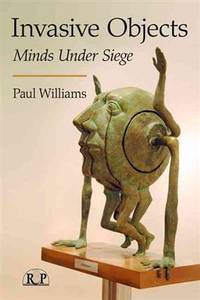
Invasive Objects

Invasive Objects

Invasive Objects
Stock photo: cover may vary

Invasive Objects Papeback - - 1st Edition

by Paul Williams

Add to wish list
  • New
New

Description

Taylor & Francis Group , pp. 272 . Papeback. New.
Ask the seller a question Add to wish list
A$139.73
A$5.79 Delivery within USA
Standard delivery: 9 to 14 days
More delivery options
Ships from Cold Books (New York, United States)

Details

  • Title Invasive Objects
  • Author Paul Williams
  • Binding Papeback
  • Edition number 1st
  • Edition 1
  • Condition New
  • Pages 266
  • Volumes 1
  • Language ENG
  • Publisher Taylor & Francis Group , London
  • Publication date pp. 272
  • Illustrated Yes
  • Features Bibliography, Illustrated, Index
  • Bookseller's Inventory # 6765674
  • ISBN 9780415995474 / 0415995477
  • Weight 0.79 lbs (0.36 kg)
  • Dimensions 8.8 x 5.9 x 0.6 in (22.35 x 14.99 x 1.52 cm)
  • Themes
    • Aspects (Academic): Psychological
  • Category Psychology
  • Library of Congress subjects Psychoanalysis, Psychology, Pathological
  • Library of Congress Catalogue Number 2009030273
  • Dewey Decimal Code 616.891
  • Quantity available 4

About Cold Books New York, United States

Biblio member since 2012

Terms of Sale: 30 day return guarantee, with full refund including shipping costs for up to 30 days after delivery if an item arrives misdescribed or damaged.

Browse books from Cold Books

Reader reviews for Invasive Objects

From the publisher

The "Director" controls Ms. B's life. He flatters her, beguiles her, derides her. His instructions pervade each aspect of her life, including her analytic sessions, during which he suggests promiscuous and dangerous things for Ms. B to say and do, when he suspects that her isolated state is being changed by the therapy. The "Director" is a diabolical foreign body installed in the mind who purports to protect but who keeps Ms. B feeling profoundly ill and alone.

The story of Ms. B's analysis is one of many vivid illustrations presented in this collection of papers by Paul Williams, who shares his lifetime of experience working with severely disturbed patients. As the title suggests, the unifying thread of these papers is the investigation of serious mental disturbance, often characterized by the presence of intrusive and invasive thoughts and fantasies that originate in a traumatic past but which can colonize and destroy the rational mind. The diverse papers are grouped into two related sections. Part one is comprised of papers with a clinical orientation, including a summary of the analysis of Ms. B as well as a speculative paper on the psychosis and recovery of John Nash. In part two, applied psychoanalytic thinking is integrated with Williams' other professional passion, anthropology, in a paper that exemplifies generative thought through art, poetry, and tribal masks. Other papers in this section include a short essay that takes Freud-bashers to task, a reappraisal of the Rat Man, and a lively discussion of Andr Green's "central phobic position" in borderline thinking.

Whether engaging in the coconstructed therapeutic relationship or the implications for "madness in society" at large, Williams' diverse influences - psychoanalytic and otherwise - repeatedly come to the fore in an intellectually stimulating and clinically enriching way. It goes without saying that work with patients whose thinking is psychotic is a challenge, as these papers clearly demonstrate, but Williams reminds us that it is a challenge that psychoanalysis can not only engage but also treat with enduring and impressive therapeutic results.

About the author

Paul Williams, Ph.D., is a training and supervising analyst with the British Psychoanalytical Society and a consultant psychotherapist in the British National Health Service, as well as a member of the Royal Anthropological Institute. From 2001-2007 he was joint Editor-in-Chief, with Glen Gabbard, of the International Journal of Psychoanalysis. He has written widely on the subjects of personality disorders and psychosis, and co-authored, with Murray Jackson, Unimaginable Storms: A Search for Meaning in Psychosis (Karnac, 1994).

tracking-