BIBLIO is the largest independent book marketplace in the world, with over 100 million books.

Skip to content

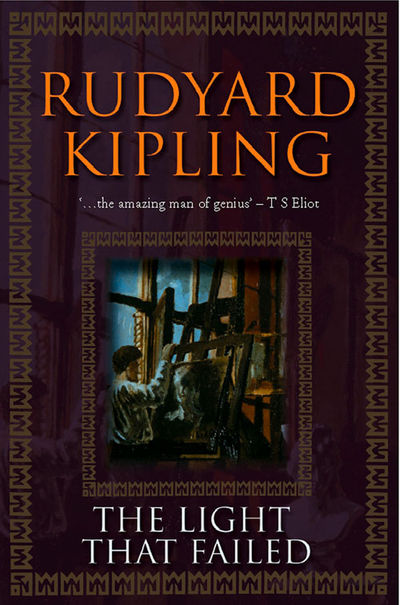
The Light That Failed

The Light That Failed

The Light That Failed
Stock photo: cover may vary

The Light That Failed Paperback - 2002

by Kipling, Rudyard

Add to wish list
  • Used
  • Paperback
Used; Very Good

Description

House of Stratus, 12/31/2002. New edition. Paperback. Used; Very Good. **WE SHIP WITHIN 24 HRS FROM LONDON, UK, 98% OF OUR ORDERS ARE RECEIVED WITHIN 7-10 DAYS. We believe you will be completely satisfied with our quick and reliable service. All orders are dispatched as swiftly as possible! Buy with confidence! Greener Books.
Ask the seller a question Add to wish list
A$13.49
A$32.78 Delivery to USA
Standard delivery: 7 to 10 days
More delivery options
Ships from Greener Books Ltd (Greater London, United Kingdom)

Details

  • Title The Light That Failed
  • Author Kipling, Rudyard
  • Binding Paperback
  • Edition New edition
  • Condition Used; Very Good
  • Pages 250
  • Volumes 1
  • Language ENG
  • Publisher House of Stratus
  • Publication date 12/31/2002
  • Bookseller's Inventory # 3001623
  • ISBN 9781842329474 / 1842329472
  • Weight 0.66 lbs (0.30 kg)
  • Dimensions 8.08 x 5.44 x 0.59 in (20.52 x 13.82 x 1.50 cm)
  • Category Fiction - General
  • Dewey Decimal Code FIC
  • Quantity available 1

About Greener Books Ltd Greater London, United Kingdom

Biblio member since 2010

Greener Books is an enterprise with a particular passion for supporting the Environment and Sustainability! We strive at all times to meet our customers expectation and in most cases exceed them.

Terms of Sale:

30 day return guarantee, with full refund including shipping costs for up to 30 days after delivery if an item arrives misdescribed or damaged. Feel free to contact our customer service team on customercare@greenerbooks.co.uk if you have queries regarding your order.

Browse books from Greener Books Ltd

Reader reviews for The Light That Failed

From the publisher

The Light That Failed is a haunting and powerful novel of human suffering, love and loss. In Dick Heldar, artist and journalist, we see a man struggling to rise above his cruel beginnings and neglected childhood to grasp at a chance for happiness in later life. However as his hopes slowly turn to dust, his determination and mental powers begin to drain away, and the onset of premature physical decline determines his final demise. In a shocking and tragic conclusion, Kipling completes his frighteningly realistic survey of physical and psychological breakdown.

About the author

Rudyard Joseph Kipling was born in the then named Bombay, India on 30th December 1865. Aged six, he was sent to England to be educated, firstly in Southsea, where he was cared for in a foster home, and later at Westward Ho, a United Services College in Devon. A life of misery at the former was described in his story 'Baa Baa Black Sheep', whilst Westward Ho was used as a basis for his questioning the public school ethic in 'Stalky and Co'. Kipling returned to India in 1882 to work as an assistant editor for the Civil and Military Gazette of Lahore. His reputation as a writer was established with stories of English life in India, published there in 1888/9. The Phantom Rickshaw, Soldiers Three and Under the Deodars are amongst these early works. Returning to England in 1889, Kipling settled in London and continued to earn a living as a writer. In 1892 he married Caroline Balestier, an American. They travelled extensively in the following four years, including a spell living in America, and it was in this time most of his enduring work was written, not least The Jungle Book and The Second Jungle Book . Kipling once again returned to England in 1896 and continued his writing career, although tragedy hit the family when his eldest daughter, Josephine, died in 1899. Nonetheless, in 1901 he completed Kim, often considered to be his best work. The following year, having settled in Sussex, he published Just So Stories, a book he had planned to write for Josephine. Having refused the position of Poet Laureate, which was offered in 1895, he did accept the Nobel Prize for Literature, becoming the first English author to be so honoured. By 1910, however, Kipling s appeal was waning. His poems and stories were based on values that were perceived as outdated. There was widespread reaction against Victorian imperialism, highlighted by the incompetent management of the Boer War. When World War I came, Kipling had difficulty in adapting to the mood of the public and after his only son, John, was reported missing in action believed killed in 1915, he became very active on the War Graves Commission. After the war he became an increasingly isolated figure, although some of his best writing was to come, with Debits and Credits in 1926 and Limits and Renewals in 1932. Kipling died in 1936 in London and was buried in Westminster Abbey. Today, however, he is once again avidly read not just for the quality of his writing and storytelling, but through a renewed interest in the behaviour and values he represented."
tracking-