BIBLIO is the largest independent book marketplace in the world, with over 100 million books.

Skip to content

Monuments

Monuments

Monuments
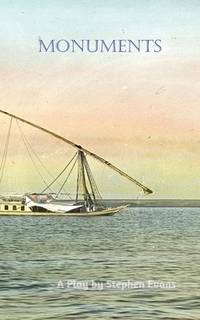
Stock photo: cover may vary

Monuments Paperback - 2024

by Evans, Stephen

Add to wish list
  • Used
  • Good
  • Paperback
Used - Good

Description

paperback. Good. Access codes and supplements are not guaranteed with used items. May be an ex-library book.
Ask the seller a question Add to wish list
A$41.65
Free Delivery within USA
Standard delivery: 7 to 14 days
More delivery options
Dropship order
Ships from Bonita (California, United States)

Details

  • Title Monuments
  • Author Evans, Stephen
  • Binding Paperback
  • Condition Used - Good
  • Pages 152
  • Volumes 1
  • Language ENG
  • Publisher Time Being Media, LLC
  • Publication date 2024-02-07
  • Bookseller's Inventory # 1953725376.G
  • ISBN 9781953725370 / 1953725376
  • Weight 0.38 lbs (0.17 kg)
  • Dimensions 8 x 5 x 0.35 in (20.32 x 12.70 x 0.89 cm)
  • Category Plays / Drama
  • Quantity available 1

About Bonita California, United States

Biblio member since 2020

Terms of Sale: 30 day return guarantee, with full refund including original shipping costs for up to 30 days after delivery if an item arrives misdescribed or damaged.

Browse books from Bonita

Reader reviews for Monuments

From the publisher

Monuments is a play in one act exploring the tragic life and remarkable mind of America's greatest philosopher, Ralph Waldo Emerson.


In July of 1872, Ralph Waldo Emerson's house in Concord, Massachusetts, caught fire. His many friends and admirers raised money for repairs, and to send him on a journey across the ocean while those repairs were being made.


At the time of this voyage, Emerson was one the most famous Americans in the world, and the most famous American intellectual since Franklin. Everywhere he went he was invited to speak and read from his works. But his memory, which had been declining for a few years, declined even more seriously after the fire. No longer considered capable of traveling alone, his daughter Ellen Tucker Emerson (who was named for his first wife) accompanied him and managed the trip.


This tale of a few moments on that voyage is imagined, though based in some details on the letters of Emerson's first wife Ellen and his namesake daughter Ellen, and his journals.


In addition to this episode in Emerson's life, the play travels back to other turning points. First is his relationship with Henry David Thoreau.

In September of 1847, after two productive and life-altering years in his cabin at Walden Pond, Henry David Thoreau left Walden and eventually returned to the household of his friend and mentor Ralph Waldo Emerson.


Why did he leave? In Walden, Thoreau says: "I left the woods for as good a reason as I went there. Perhaps it seemed to me that I had several more lives to live, and could not spare any more time for that one."


In one section, the play imagines Emerson confronting Thoreau in July 1847, attempting to convince him to leave the cabin at Walden and return to Concord.


A few years earlier, in January 1842, a nine-year-old Louisa May Alcott comes to inquire about Emerson's son Waldo. In January of 1842, Ralph Waldo Emerson's son Waldo fell ill with scarlet fever. Five days later, he died.


As Louisa May Alcott later described that day, her father Bronson, Emerson's close friend, sent his her to see how the young boy was doing. When Emerson opened the door, she explained her errand. "He is dead, child," Emerson said, and slowly closed the door.


This play imagines a different scenario, in which both Emerson's protg (and jack of all trades) Henry David Thoreau and Emerson's grieving wife Lidian have parts to play.


Louisa from a young age was a frequent visitor to the Emerson household, had looked after the children Waldo and Ellen, and had crushes on the two very different men, both of whom were to influence her life and writing.


Finally, Emerson confronts the loss of his first wife Ellen, who died of consumption only two years after they were married. It is her memory that is his Beatrice, who guides him on the journey through the events of his life.


Emerson, the young Emerson at least, is the most optimistic of philosophers. Yet his life was full of tragedy. He expresses contradictory views of this in two works: his poem Threnody, and his essay Experience. Portions of both are included here.


This is the conflict in Emerson that has fascinated and perplexed me for as long as I have been reading him. This play is my attempt at understanding this brilliant, complex, kind, funny, tragic man.


tracking-