BIBLIO is the largest independent book marketplace in the world, with over 100 million books.

Skip to content

Powder Diffraction

Powder Diffraction

Powder Diffraction
Stock photo: cover may vary

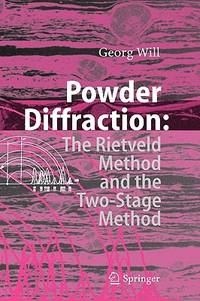
Powder Diffraction Hardback - 2005 - 2006th Edition

by Will, Georg,

Add to wish list
  • New
New

Description

new.
Ask the seller a question Add to wish list
A$177.17
A$5.84 Delivery within USA
Standard delivery: 2 to 14 days
More delivery options
Ships from GreatBookPrices (Maryland, United States)

Details

  • Title Powder Diffraction
  • Author Will, Georg,
  • Binding Hardback
  • Edition number 2006th
  • Edition 2006
  • Condition New
  • Pages 224
  • Volumes 1
  • Language ENG
  • Publisher Springer, Secaucus, New Jersey, U.S.A.
  • Publication date 2005-11-17
  • Bookseller's Inventory # 4046266-n
  • ISBN 9783540279853 / 3540279857
  • Weight 1.1 lbs (0.50 kg)
  • Dimensions 9.3 x 6.5 x 0.9 in (23.62 x 16.51 x 2.29 cm)
  • Category Science
  • Library of Congress Catalogue Number 2005931757
  • Dewey Decimal Code 548.83
  • Quantity available 5

About GreatBookPrices Maryland, United States

Biblio member since 2024

Since 1991, we have worked every day to serve our customers with state-of-the-art technology and world class service. We are dedicated to providing customers around the world with the widest selection of books, DVDs, and CDs at the absolute lowest price.

Terms of Sale: 30 day return guarantee, with full refund including original shipping costs for up to 30 days after delivery if an item arrives misdescribed or damaged.

Browse books from GreatBookPrices

Reader reviews for Powder Diffraction

From the publisher

Crystal structure analysis from powder diffraction data has attracted considerable and ever growing interest in the last decades. X-ray powder diffraction is best known for phase analysis (Hanawalt files) dating back to the 30s. In the late 60s the inherent potential of powder diffraction for crystallographic problems was realized and scientists developed methods for using powder diffraction data at first only for the refinement of crystal structures. With the development of ever growing computer power profile fitting and pattern decomposition allowed to extract individual intensities from overlapping diffraction peaks opening the way to many other applications, especially to ab initio structure determination.

Powder diffraction today is used in X-ray and neutron diffraction, where it is a powerful method in neutron diffraction for the determination of magnetic structures. In the last decade the interest has dramatically improved. There is hardly any field of crystallography where the Rietveld, or full pattern method has not been tried with quantitative phase analysis the most important recent application.

About the author

Georg Will studied physics and crystallography a the Technische Hochschule Mnchen. In 1961 he moved to the USA, where he worked at the Brook National Laboratory, where in collaboration with Walter Hamilton the idea was born to analyse crystal structure from powder diffraction data using a POWLS program. A decisive step forward came in the 1980's when he worked with Bill Parrish at the IBM Research Laboratory in San Jos, California. At that time the "two stage method" was developed to its present state, beginning the analysis of computer based profile fitting followed by least squares refinements and Fourier methods.

He returned to Germany in 1965 and to Bonn in 1969, where he concentrated on neuron diffraction for the study of crystal and magnetic strucutres using the "two stage method".The "Rietveld method" was also applied, although it was only useful for limited and some well defined problems. Later he extended his interest to in-situ high pressure diffraction with synchroton radiation. In 1990 with the newly developed position-sensitive detector JULIOS, diffraction experiments were started at the spallation source ISIS in England. Through the simultaneous recording of angles and energies, this detector in combination with the "two stage method" gave a specific advantage in studying powders as well as single crystals (Laue diffraction) with spallation source neutrons.

tracking-