BIBLIO is the largest independent book marketplace in the world, with over 100 million books.

Skip to content

Practical Computing for Biologists

Practical Computing for Biologists

Practical Computing for Biologists
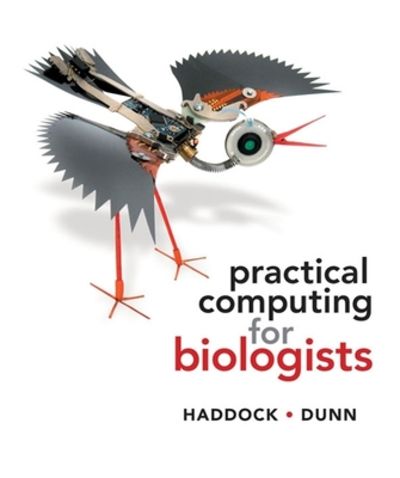
Stock photo: cover may vary

Practical Computing for Biologists Paperback - 2010

by Steven Haddock, Casey Dunn

Add to wish list
  • Used
Used - Good

Description

Sinauer Associates is an imprint of Oxford University Press. Used - Good. . . All orders guaranteed and ship within 24 hours. Your purchase supports More Than Words, a nonprofit job training program for youth, empowering youth to take charge of their lives by taking charge of a business.
Ask the seller a question Add to wish list
A$3.58
A$4.32 Delivery within USA
Standard delivery: 7 to 14 days
More delivery options
Ships from More Than Words Inc. (Massachusetts, United States)

Details

  • Title Practical Computing for Biologists
  • Author Steven Haddock, Casey Dunn
  • Binding Paperback
  • Edition First
  • Condition Used - Good
  • Pages 564
  • Volumes 1
  • Language ENG
  • Publisher Sinauer Associates is an imprint of Oxford University Press, U.S.A.
  • Publication date 2010-11-05
  • Illustrated Yes
  • Features Illustrated, Index, Table of Contents
  • Bookseller's Inventory # WAL-J-3g-002619
  • ISBN 9780878933914 / 0878933913
  • Weight 2.64 lbs (1.20 kg)
  • Dimensions 9.07 x 7.58 x 1.03 in (23.04 x 19.25 x 2.62 cm)
  • Category Science
  • Library of Congress subjects Biology - Data processing
  • Library of Congress Catalogue Number 2010039486
  • Dewey Decimal Code 570.285

About More Than Words Inc. Massachusetts, United States

Biblio member since 2016

More Than Words empowers youth who are in foster care, court-involved, homeless or out of school to take charge of their lives by taking charge of a business. MTW believes that when system-involved youth are challenged with authentic and increasing responsibilities in a business setting, and are given high expectations and a culture of support, they can and will address personal barriers to success, create concrete action plans for their lives, and become contributing members of society. More Than Words began as an online bookselling training program for youth in DCF custody in 2004 and opened its vibrant bookstore on Moody St in Waltham in 2005 and added its Starbucks coffee bar in 2008. MTW replicated its model in the South End of Boston in 2011, thereby doubling the number of youth served annually.

Terms of Sale:

30 day return guarantee, with full refund including original shipping costs for up to 30 days after delivery if an item arrives misdescribed or damaged.

Browse books from More Than Words Inc.

Reader reviews for Practical Computing for Biologists

From the publisher

Increasingly, scientists find themselves facing exponentially larger data sets and analyses without suitable tools to deal with them. Many biologists end up using spreadsheet programs for most of their data-processing tasks and spend hours clicking around or copying and pasting, and then repeating the process for other data files.

Practical Computing for Biologists shows you how to use many freely available computing tools to work more powerfully and effectively. The book was born out of the authors' own experience in developing tools for their research and helping other biologists with their computational problems. Although many of the techniques are relevant to molecular bioinformatics, the motivation for the book is much broader, focusing on topics and techniques that are applicable to a range of scientific endeavors. Twenty-two chapters organized into six parts address these topics (and more; see Contents):

*Searching with regular expressions

*The Unix command line

*Python programming and debugging

*Creating and editing graphics

*Databases

*Performing analyses on remote servers

*Working with electronics

While most of the concepts and examples apply to any operating system, the main narrative focuses on Mac OS X. Where there are differences for Windows and Linux users, parallel instructions are provided in the margin and in an appendix. The book is designed to be used as a self-guided resource for researchers, a companion book in a course, or as a primary textbook. Practical Computing for Biologists will free you from the most frustrating and time-consuming aspects of data processing so you can focus on the pleasures of scientific inquiry.

RESOURCES

For Students

The Companion Website includes downloads, community forums, tips and examples, and textbook errata and updates.

For Instructors

The Instructor's Resource Library features all of the textbook's figures and tables, provided in ready-to-use PowerPoint presentations.

Media reviews

Citations

  • Choice, 05/01/2011, Page 0
  • Reference and Research Bk News, 02/01/2011, Page 264

About the author

Steven H.D. Haddock is a Research Scientist at the Monterey Bay Aquarium Research Institute and adjunct Associate Professor at the University of California, Santa Cruz, studying bioluminescence and biodiversity of gelatinous zooplankton. He started programming in BASIC on an Apple ][ and began his undergraduate studies in engineering before deciding to change fields. He took this programming background with him to his graduate studies in Marine Biology, where he quickly realized the advantages that computing skills offered and felt compelled to help foster these abilities in others. He has developed many utilities and devices for research, including instruments to monitor bioluminescence from fireflies, a freezer monitoring system, a web-based conference registration database, and a PCR calculator for smartphones. In addition to teaching invertebrate zoology and writing a booklet to teach the technique of blue-water scuba diving, he has given tutorials in computing to students and administrators. His interest in education extends to his Bioluminescence Web Page (http: //lifesci.ucsb.edu/ biolum/) and the Jellywatch.org citizen-science website (www.jellywatch.org).

Casey W. Dunn, a Professor at Yale University, does research that has a large computational component but always in conjunction with work in the field and lab. His first interest in computers stemmed from building electronics, and he further developed his computational skills working in Silicon Valley while an undergraduate. As his data sets grew larger and larger during grad school and his postdoc, he found himself reaching back to his computer background more often. In the course of his own research and helping other biologists with their computational challenges, he became concerned about the mismatch between training opportunities and the real day-to-day computational problems biologists face. In addition to teaching invertebrate biology, evolution, and development, his educational activities include the websites siphonophores.org and creaturecast.org. Dr. Dunn is the recipient of the National Science Foundation's 2011 Alan T. Waterman Award, recognizing an outstanding young researcher in any field of science or engineering supported by NSF.

tracking-