
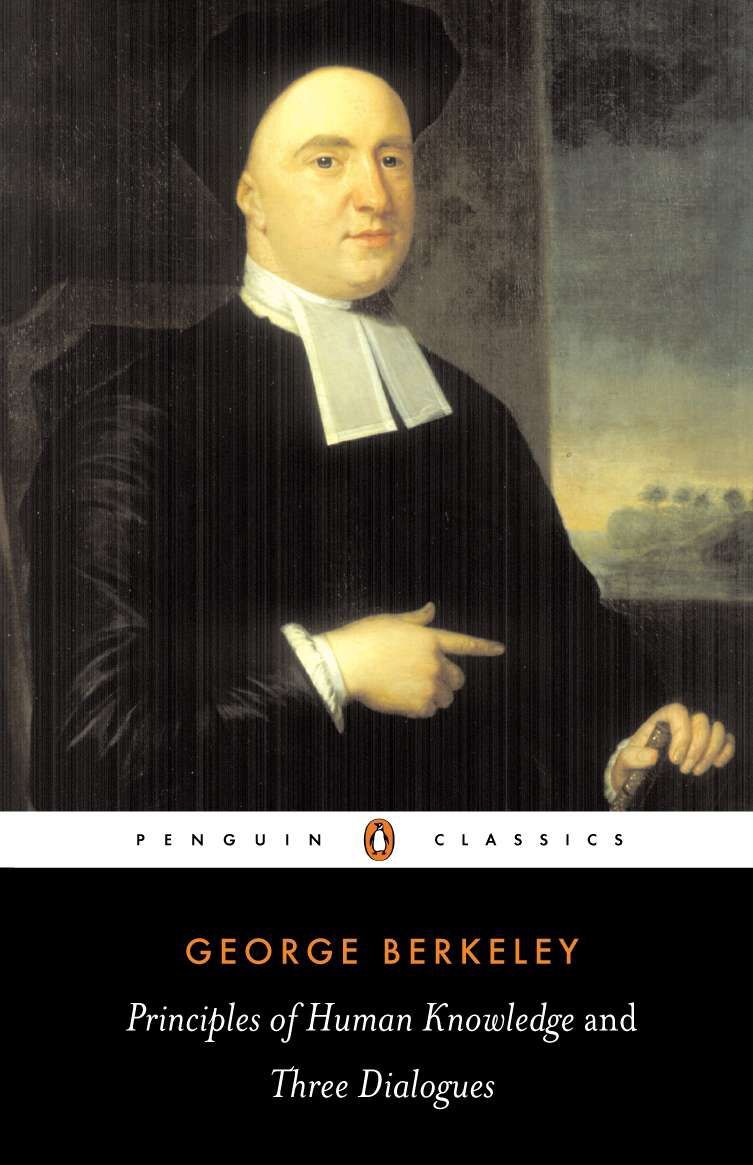
Stock photo: cover may vary
Principles of Human Knowledge and Three Dialogues Between Hylas and Phil Papeback -
by George Berkeley
- New
A$24.57
A$5.74
Delivery within USA
Standard delivery: 9 to 14 days
More delivery options
Standard delivery: 9 to 14 days
Ships from Cold Books (New York, United States)
Details
- Title Principles of Human Knowledge and Three Dialogues Between Hylas and Phil
- Author George Berkeley
- Binding Papeback
- Edition Reprint
- Condition New
- Pages 224
- Volumes 1
- Language ENG
- Publisher Penguin Books , London
- Publication date pp. 224
- Features Bibliography
- Bookseller's Inventory # 6671216
- ISBN 9780140432930 / 0140432930
- Weight 0.41 lbs (0.19 kg)
- Dimensions 7.68 x 5.28 x 0.58 in (19.51 x 13.41 x 1.47 cm)
- Age range 18 to UP years
- Grade levels 13 - UP
- Reading level 1510
-
Themes
- Chronological Period: Modern
- Category Philosophy
- Library of Congress subjects Soul, Idealism
- Library of Congress Catalogue Number 88170819
- Dewey Decimal Code 192
- Quantity available 10
About Cold Books New York, United States
Summary
Whether viewed as extreme skepticism or enlightened common sense, the writings of Berkeley are a major influence on modern philosophy. Bishop Berkeley (1685-1753) was one of the great British empirical philosophers. He believed that the existence of material objects depends on their being perceived and The Principles of Human Knowledge sets out this denial of non-mental material reality. At first his views were unfavorably received by the London intelligentsia, and the entertaining Three Dialogues between Hylas and Philonous are a clarification of the Realist argument and a response to accusations of atheism and skepticism. In the nineteenth century John Stuart Mill wrote that he considered Berkeley's work to be of "greatest philosophic genius," and it is true to say that its Immaterialism has influenced many recent philosophers.
Reader reviews for Principles of Human Knowledge and Three Dialogues Between Hylas and Phil
Write a review for this book
Important Terms and Guidelines
- Please focus on the book’s content and context. Also, add any personal comments as to how you enjoyed the book. Substantiate your likes and dislikes. You may make comparisons to other books.
- Reviews must be at least 140 characters in length.
- Please do not reveal critical plot elements.
- This is not a help line. Contact customer support if you need help.
Your review must not include:
- Obscenities, discriminatory language, or other insulting language not suitable for public domain
- Advertisements, “spam” content, or references to other products, offers or websites.
- Email addresses, URLs, phone numbers, physical addresses or other contact information.
- Overly critical comments about other reviews or reviewers
- Time-sensitive material (i.e. promotional tours, seminars, lectures, etc.)
- Availability, price, or alternative ordering/shipping information

