
Click to view full size.
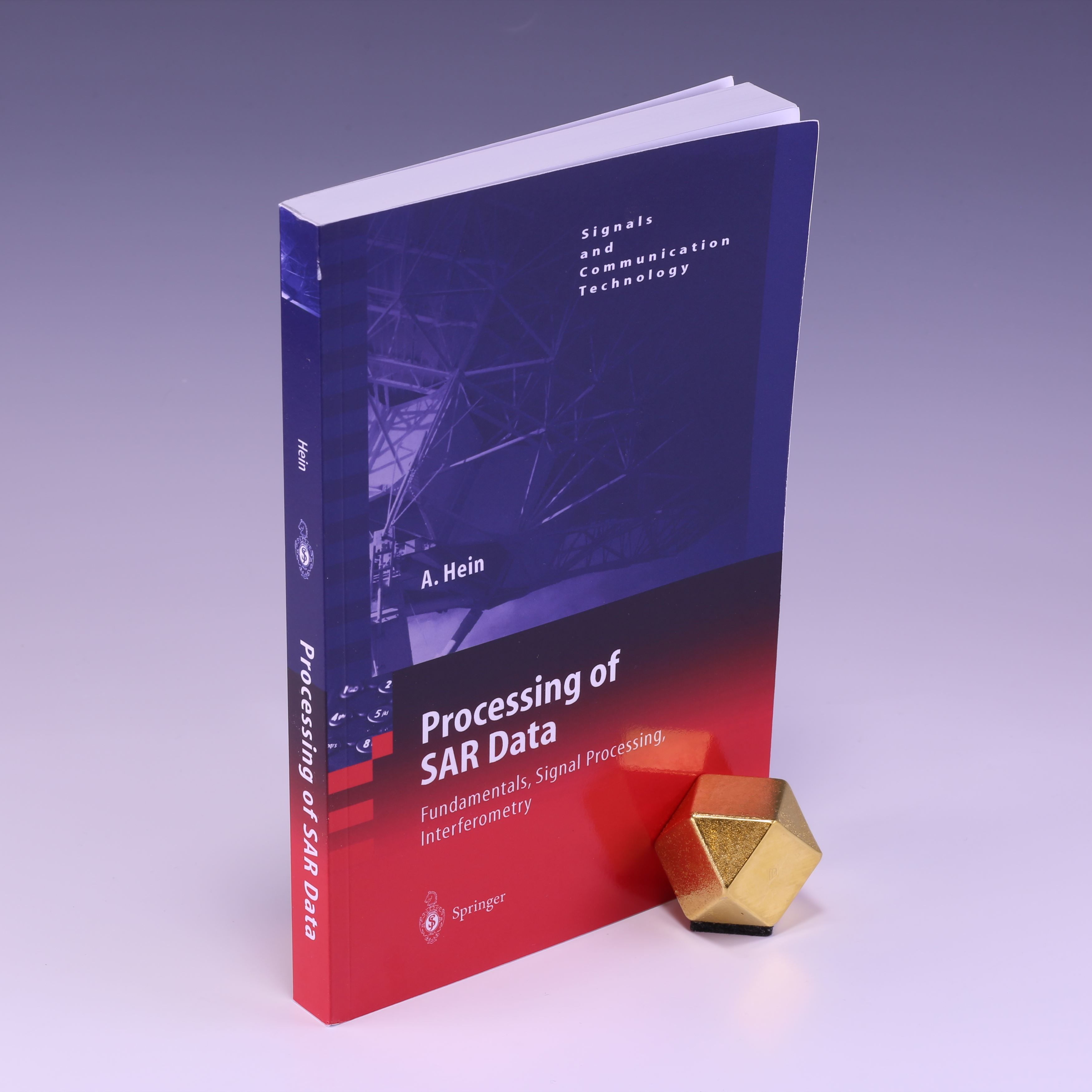

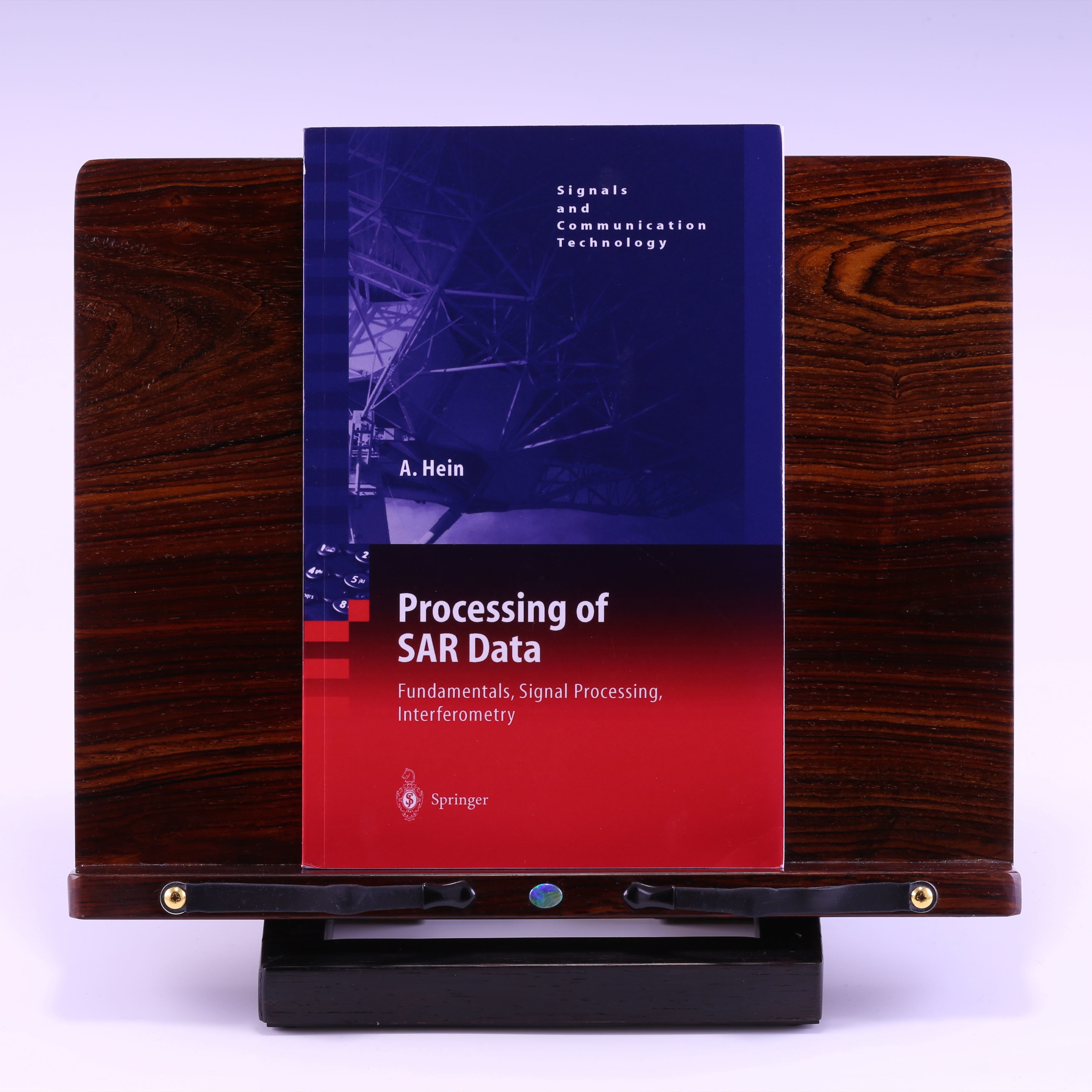
Processing of SAR Data: Fundamentals, Signal Processing, Interferometry (Signals and Communication Technology) Softcover - 2010
by Achim Hein
- Used
- very good
- Paperback
- first
A$141.29
A$5.78
Delivery within USA
Standard delivery: 7 to 14 days
More delivery options
Standard delivery: 7 to 14 days
Details
- Title Processing of SAR Data: Fundamentals, Signal Processing, Interferometry (Signals and Communication Technology)
- Author Achim Hein
- Binding Paperback
- Edition 1
- Condition Used - Very good
- Pages 291
- Volumes 1
- Language ENG
- Publisher Springer-Verlag Publishing
- Publication date 2010
- Bookseller's Inventory # SKU-U67SA00807148
- ISBN 9783642057106 / 3642057101
- Weight 1.16 lbs (0.53 kg)
- Dimensions 9.25 x 6.1 x 0.7 in (23.50 x 15.49 x 1.78 cm)
- Category Technology & Industrial Arts
- Dewey Decimal Code 621.384
- Quantity available 1
About Salish Sea Books Washington, United States
Biblio member since 2005
Thank you for taking an interest in one of our books. We specialize in out-of-print or otherwise difficult-to-acquire books. All books are carefully graded. All books are cleaned, checked for binding defects, torn jackets, etc., and any defects are fully corrected before any book is offered for sale. Any defects that cannot be corrected will be mentioned in the description. Major repairs will also be mentioned. All books are shipped in sturdy shipping boxes to prevent unnecessary damage while in transit. Domestic order are shipped with either Delivery Confirmation or Signature Confirmation, the number of which is available upon request. Thanks.
All purchases may be returned for any reason within two weeks of date of receipt. A full refund minus all shipping costs is issued when the book is received back again. If the book has been misrepresented in some way, seller will pay all shipping costs.
Reader reviews for Processing of SAR Data: Fundamentals, Signal Processing, Interferometry (Signals and Communication Technology)
Write a review for this book
Important Terms and Guidelines
- Please focus on the book’s content and context. Also, add any personal comments as to how you enjoyed the book. Substantiate your likes and dislikes. You may make comparisons to other books.
- Reviews must be at least 140 characters in length.
- Please do not reveal critical plot elements.
- This is not a help line. Contact customer support if you need help.
Your review must not include:
- Obscenities, discriminatory language, or other insulting language not suitable for public domain
- Advertisements, “spam” content, or references to other products, offers or websites.
- Email addresses, URLs, phone numbers, physical addresses or other contact information.
- Overly critical comments about other reviews or reviewers
- Time-sensitive material (i.e. promotional tours, seminars, lectures, etc.)
- Availability, price, or alternative ordering/shipping information
From the publisher
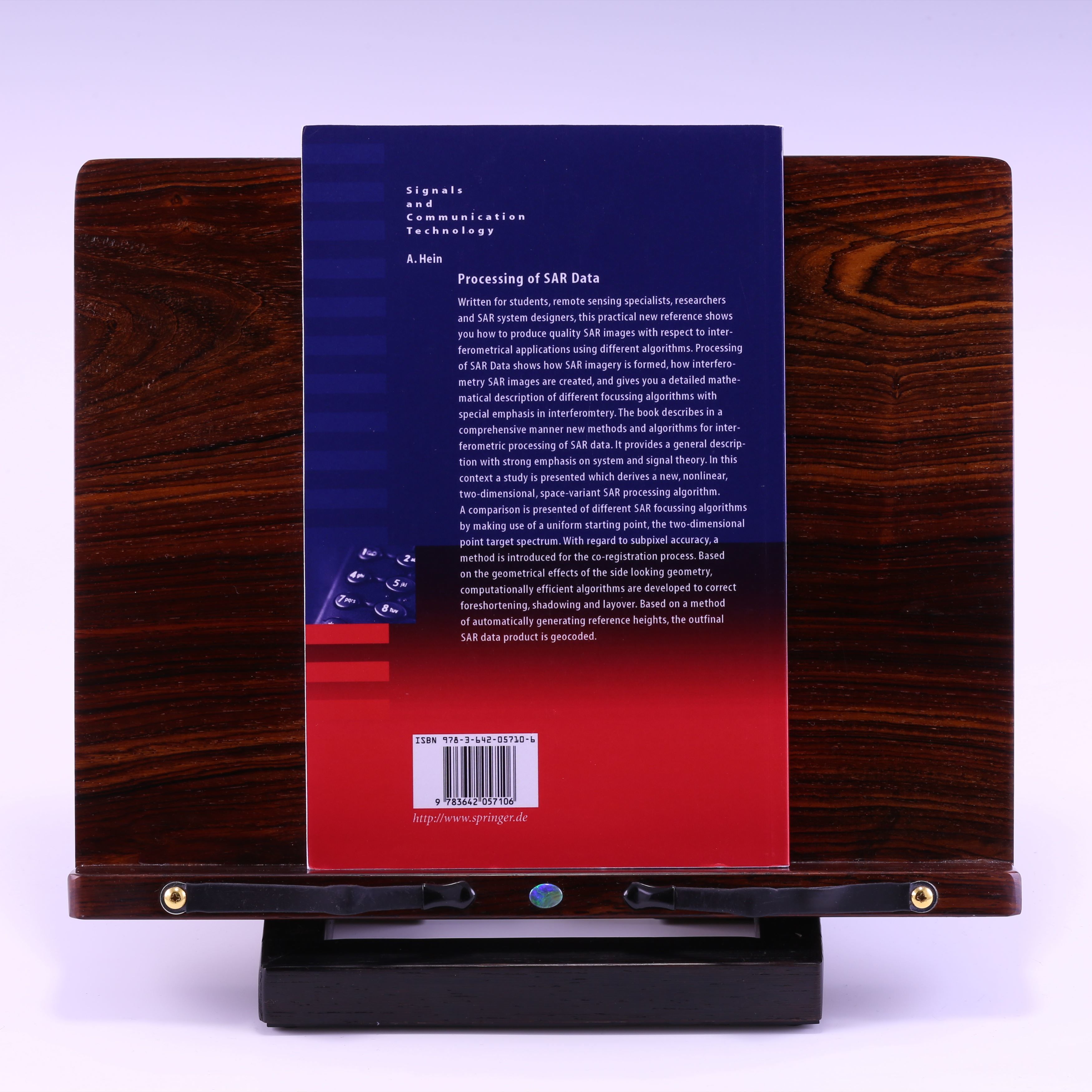
From the rear cover
Written for students, remote sensing specialists, researchers and SAR system designers, this practical new reference shows you how to produce quality SAR images with respect to interferometrical applications using different algorithms. Processing of SAR Data shows how SAR imagery is formed, how interferometry SAR images are created, and gives you a detailed mathematical description of different focussing algorithms with special emphasis in interferomtery. The book describes in a comprehensive manner new methods and algorithms for interferometric processing of SAR data. It provides a general description with strong emphasis on system and signal theory. In this context a study is presented which derives a new, nonlinear, two-dimensional, space-variant SAR processing algorithm. A comparison is presented of different SAR focussing algorithms by making use of a uniform starting point, the two-dimensional point target spectrum. With regard to subpixel accuracy, a method is introduced for the co-registration process. Based on the geometrical effects of the side looking geometry, computationally efficient algorithms are developed to correct foreshortening, shadowing and layover. Based on a method of automatically generating reference heights, the outfinal SAR data product is geocoded.

