BIBLIO is the largest independent book marketplace in the world, with over 100 million books.

Skip to content

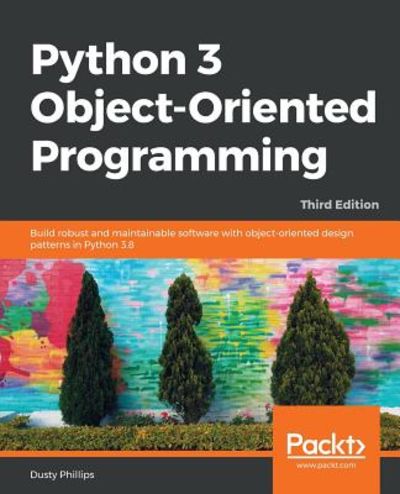
Python 3 Object-Oriented Programming: Build robust and maintainable software with object-oriented design patterns in Python 3.8

Python 3 Object-Oriented Programming: Build robust and maintainable software with object-oriented design patterns in Python 3.8

Python 3 Object-Oriented Programming: Build robust and maintainable software
Stock photo: cover may vary

Python 3 Object-Oriented Programming: Build robust and maintainable software with object-oriented design patterns in Python 3.8 Paperback - 2018

by Phillips, Dusty

Add to wish list
  • Used
  • Good
  • Paperback
Used - Good

Description

paperback. Good. Access codes and supplements are not guaranteed with used items. May be an ex-library book.
Ask the seller a question Add to wish list
A$80.14
Free Delivery within USA
Standard delivery: 7 to 14 days
More delivery options
Dropship order
Ships from Bonita (California, United States)

Details

About Bonita California, United States

Biblio member since 2020

Terms of Sale: 30 day return guarantee, with full refund including original shipping costs for up to 30 days after delivery if an item arrives misdescribed or damaged.

Browse books from Bonita

Reader reviews for Python 3 Object-Oriented Programming: Build robust and maintainable software with object-oriented design patterns in Python 3.8

From the publisher

Uncover modern Python with this guide to Python data structures, design patterns, and effective object-oriented techniques

Key Features
  • In-depth analysis of many common object-oriented design patterns that are more suitable to Python's unique style
  • Learn the latest Python syntax and libraries
  • Explore abstract design patterns and implement them in Python 3.8
Book Description

Object-oriented programming (OOP) is a popular design paradigm in which data and behaviors are encapsulated in such a way that they can be manipulated together. This third edition of Python 3 Object-Oriented Programming fully explains classes, data encapsulation, and exceptions with an emphasis on when you can use each principle to develop well-designed software.

Starting with a detailed analysis of object-oriented programming, you will use the Python programming language to clearly grasp key concepts from the object-oriented paradigm. You will learn how to create maintainable applications by studying higher level design patterns. The book will show you the complexities of string and file manipulation, and how Python distinguishes between binary and textual data. Not one, but two very powerful automated testing systems, unittest and pytest, will be introduced in this book. You'll get a comprehensive introduction to Python's concurrent programming ecosystem.

By the end of the book, you will have thoroughly learned object-oriented principles using Python syntax and be able to create robust and reliable programs confidently.

What you will learn
  • Implement objects in Python by creating classes and defining methods
  • Grasp common concurrency techniques and pitfalls in Python 3
  • Extend class functionality using inheritance
  • Understand when to use object-oriented features, and more importantly when not to use them
  • Discover what design patterns are and why they are different in Python
  • Uncover the simplicity of unit testing and why it's so important in Python
  • Explore concurrent object-oriented programming
Who this book is for

If you're new to object-oriented programming techniques, or if you have basic Python skills and wish to learn in depth how and when to correctly apply OOP in Python, this is the book for you. If you are an object-oriented programmer for other languages or seeking a leg up in the new world of Python 3.8, you too will find this book a useful introduction to Python. Previous experience with Python 3 is not necessary.

Table of Contents
  1. Object-oriented Design
  2. Objects in Python
  3. When Objects Are Alike
  4. Expecting the Unexpected
  5. When to Use Object-oriented Programming
  6. Python Data Structures
  7. Python Object-oriented Shortcuts
  8. Strings and Serialization
  9. The Iterator Pattern
  10. Python Design Patterns I
  11. Python Design Patterns II
  12. Testing Object-oriented Programs
  13. Concurrency
tracking-