BIBLIO is the largest independent book marketplace in the world, with over 100 million books.

Skip to content

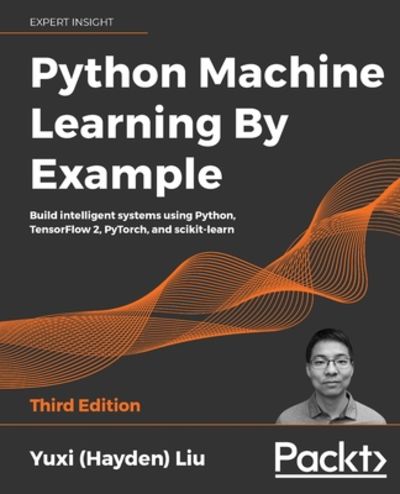
Python Machine Learning by Example - Third Edition: Build intelligent systems using Python, TensorFlow 2, PyTorch, and scikit-learn

Python Machine Learning by Example - Third Edition: Build intelligent systems using Python, TensorFlow 2, PyTorch, and scikit-learn

Python Machine Learning by Example - Third Edition: Build intelligent systems
Stock photo: cover may vary

Python Machine Learning by Example - Third Edition: Build intelligent systems using Python, TensorFlow 2, PyTorch, and scikit-learn Paperback - 2020

by Liu, Yuxi (Hayden)

Add to wish list
  • Used
  • very good
  • Paperback
Used - Very good

Description

Packt Publishing, 2020. Paperback. Very Good. May have limited writing in cover pages. Pages are unmarked. ~ ThriftBooks: Read More, Spend Less.Dust jacket quality is not guaranteed.
Ask the seller a question Add to wish list
A$49.14
Free Delivery within USA
Standard delivery: 4 to 8 days
More delivery options
Ships from ThriftBooks (Washington, United States)

Details

About ThriftBooks Washington, United States

Biblio member since 2018

From the largest selection of used titles, we put quality, affordable books into the hands of readers

Terms of Sale: 30 day return guarantee, with full refund including original shipping costs for up to 30 days after delivery if an item arrives misdescribed or damaged.

Browse books from ThriftBooks

Reader reviews for Python Machine Learning by Example - Third Edition: Build intelligent systems using Python, TensorFlow 2, PyTorch, and scikit-learn

From the publisher

A comprehensive guide to get you up to speed with the latest developments of practical machine learning with Python and upgrade your understanding of machine learning (ML) algorithms and techniques


Key Features

  • Dive into machine learning algorithms to solve the complex challenges faced by data scientists today
  • Explore cutting edge content reflecting deep learning and reinforcement learning developments
  • Use updated Python libraries such as TensorFlow, PyTorch, and scikit-learn to track machine learning projects end-to-end


Book Description

Python Machine Learning By Example, Third Edition serves as a comprehensive gateway into the world of machine learning (ML).


With six new chapters, on topics including movie recommendation engine development with Nave Bayes, recognizing faces with support vector machine, predicting stock prices with artificial neural networks, categorizing images of clothing with convolutional neural networks, predicting with sequences using recurring neural networks, and leveraging reinforcement learning for making decisions, the book has been considerably updated for the latest enterprise requirements.


At the same time, this book provides actionable insights on the key fundamentals of ML with Python programming. Hayden applies his expertise to demonstrate implementations of algorithms in Python, both from scratch and with libraries.


Each chapter walks through an industry-adopted application. With the help of realistic examples, you will gain an understanding of the mechanics of ML techniques in areas such as exploratory data analysis, feature engineering, classification, regression, clustering, and NLP.


By the end of this ML Python book, you will have gained a broad picture of the ML ecosystem and will be well-versed in the best practices of applying ML techniques to solve problems.


What you will learn

  • Understand the important concepts in ML and data science
  • Use Python to explore the world of data mining and analytics
  • Scale up model training using varied data complexities with Apache Spark
  • Delve deep into text analysis and NLP using Python libraries such NLTK and Gensim
  • Select and build an ML model and evaluate and optimize its performance
  • Implement ML algorithms from scratch in Python, TensorFlow 2, PyTorch, and scikit-learn


Who this book is for

If you're a machine learning enthusiast, data analyst, or data engineer highly passionate about machine learning and want to begin working on machine learning assignments, this book is for you.


Prior knowledge of Python coding is assumed and basic familiarity with statistical concepts will be beneficial, although this is not necessary.

tracking-