
Stock photo: cover may vary
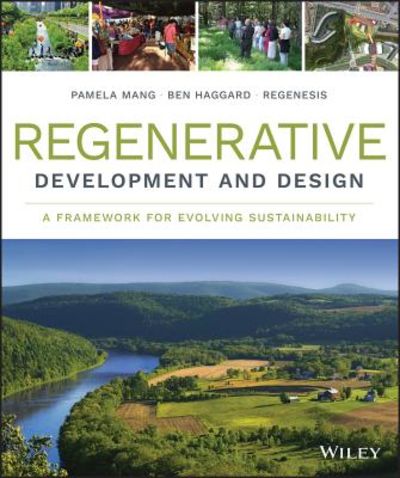
Regenerative Development and Design: A Framework for Evolving Sustainability Hardback - 2016 - 1st Edition
by John Wiley & Sons
- New
A$159.46
A$4.38
Delivery within USA
Standard delivery: 7 to 14 days
More delivery options
Standard delivery: 7 to 14 days
Ships from Ubiquity Trade (Florida, United States)
Details
- Title Regenerative Development and Design: A Framework for Evolving Sustainability
- Author John Wiley & Sons
- Binding Hardback
- Edition number 1st
- Edition 1
- Condition New
- Pages 272
- Volumes 1
- Language ENG
- Publisher Wiley
- Publication date 2016-09
- Illustrated Yes
- Features Bibliography, Illustrated, Index
- Bookseller's Inventory # 9781118972861
- ISBN 9781118972861 / 1118972864
- Weight 1.6 lbs (0.73 kg)
- Dimensions 9.1 x 8.1 x 0.8 in (23.11 x 20.57 x 2.03 cm)
-
Themes
- Demographic Orientation: Urban
- Category Architecture
- Library of Congress subjects Sustainable development
- Library of Congress Catalogue Number 2017385349
- Dewey Decimal Code 338.927
- Quantity available 100
About Ubiquity Trade Florida, United States
Biblio member since 2015
Established in 2010, Ubiquity Trade is an online procurement entity offering merchandise in a variety of industries, including books, media, education materials, and more. All merchandise is shipped brand-new from various facilities across the continental USA.
30 day return guarantee, with full refund including original shipping costs for up to 30 days after delivery if an item arrives misdescribed or damaged.
Reader reviews for Regenerative Development and Design: A Framework for Evolving Sustainability
Write a review for this book
Important Terms and Guidelines
- Please focus on the book’s content and context. Also, add any personal comments as to how you enjoyed the book. Substantiate your likes and dislikes. You may make comparisons to other books.
- Reviews must be at least 140 characters in length.
- Please do not reveal critical plot elements.
- This is not a help line. Contact customer support if you need help.
Your review must not include:
- Obscenities, discriminatory language, or other insulting language not suitable for public domain
- Advertisements, “spam” content, or references to other products, offers or websites.
- Email addresses, URLs, phone numbers, physical addresses or other contact information.
- Overly critical comments about other reviews or reviewers
- Time-sensitive material (i.e. promotional tours, seminars, lectures, etc.)
- Availability, price, or alternative ordering/shipping information
From the publisher
From the rear cover
A PRACTICAL, SYSTEMIC APPROACH TO REGENERATIVE DESIGN INTEGRATION
The concept of "sustainability" is evolving. Applying sustainability at the building or project level fails to address the fundamental root of environmental problems: the fractured relationship between humans and nature. The Regenesis Group works to promote a framework in which humans are but a part of a larger whole, and projects are not end products, but the beginning of a process that brings an ecosystem together. Regenerative Development and Design explains the fundamental principles and practices of this new paradigm, and describes how they merge into every project, every design, and every designer. Case studies show how real-world projects are bringing regenerative development to life, and a practical integration framework helps streamline implementation in current and future projects.
- Integrate evolution, place, community, and sustainability to make every project a catalyst for change
- Learn how small, opportune interventions can result in widespread systemic benefits
- Begin each project from a place of caring, co-creativity, and co-responsibility
- Understand how regenerative development fits into existing design practices
- Become an agent of regenerative change to help take sustainability to a higher level
Regenerative Development and Design is an authoritative resource for those seeking the next step forward toward true sustainability.

