BIBLIO is the largest independent book marketplace in the world, with over 100 million books.

Skip to content

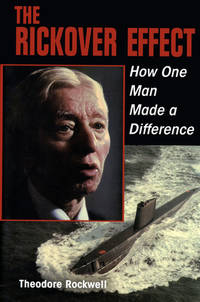
The Rickover Effect; How One Man Made a Difference

The Rickover Effect; How One Man Made a Difference

The Rickover Effect; How One Man Made a Difference
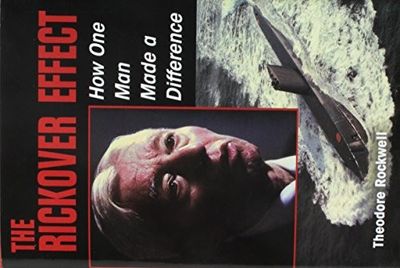
Stock photo: cover may vary

The Rickover Effect; How One Man Made a Difference Hardback - 1992

by Rockwell, Theodore

Add to wish list
  • Used
  • Hardback
  • Signed
  • first
Used - Very good.

Description

Annapolis: Naval Institute Press, 1992. First Printing [Stated]. Hardcover. Very good./good. xviii, 411, [3 p. Illustrations. Index. Key dates on endpapers. Publisher's ephemera laid in. Inscribed by author to Mary Alexander on half-title. DJ has minor chip at top of back panel. Ink note at end of narrative (page 390) "What a wonderful Person". Minor check marks on two pages. Ink notation inside back cover. DJ has some wear, soiling, and small edge tears. Foreword by Admiral James D. Watkins, USN (ret.) . Excerpts from on-line obituary of the author: "Theodore Rockwell, was a nuclear engineer who assisted in the development of nuclear-powered naval vessels. Since 1943, he had been involved in the development of nuclear power. He worked on the atomic bomb at Oak Ridge, Tenn. He worked with Navy Adm. Hyman G. Rickover on the Navy s nuclear propulsion program. He received distinguished service medals from the Navy and the Atomic Energy Commission. He received the American Nuclear Society s Lifetime Achievement Award, which is now known as the Rockwell Award." From Wikipedia: "Hyman G. Rickover (January 27, 1900 - July 8, 1986) was responsible for the original development of U.S. Navy nuclear propulsion and controlled its operations for three decades as director of Naval Reactors. In addition, he oversaw the development of the Shippingport Atomic Power Station, the world's first commercial pressurized water reactor used for generating electricity. Known as the "Father of the Nuclear Navy", Rickover's profound effects on the Navy and its most powerful warships were of such scope that he "may well go down in history as one of the Navy's most important officers." A naval officer who served in a flag rank for nearly 30 years - from 1953 to 1982 - Rickover was promoted to four-star admiral after 51 years of commissioned service. In total, with his unique personality, political connections, responsibilities, and depth of knowledge regarding naval nuclear propulsion, Rickover became the longest-serving naval officer in U.S. history with 63 years of active duty service. As of July 2007, the Naval Sea Systems Command programs which he oversaw the creation and operation of had produced 200 nuclear-powered submarines, and 23 nuclear-powered aircraft carriers and cruisers, though many of these U.S. vessels are now decommissioned and others are under construction. Rickover was the only person who has ever been awarded two Congressional Gold Medals. His substantial legacy of technical achievements includes the United States Navy's continuing record of zero reactor accidents, as defined by the uncontrolled release of fission products to the environment subsequent to reactor core damage.
Ask the seller a question Add to wish list
A$397.04
A$7.22 Delivery within USA
Standard delivery: 7 to 14 days
More delivery options
Ships from Ground Zero Books (Maryland, United States)

Details

  • Title The Rickover Effect; How One Man Made a Difference
  • Author Rockwell, Theodore
  • Binding Hardback
  • Edition First Printing [Stated]
  • Condition Used - Very good.
  • Pages 456
  • Volumes 1
  • Language ENG
  • Publisher Naval Institute Press, Annapolis
  • Publication date 1992
  • Illustrated Yes
  • Bookseller's Inventory # 72946
  • ISBN 9781557507020 / 1557507023
  • Weight 1.66 lbs (0.75 kg)
  • Dimensions 9 x 6 x 1.58 in (22.86 x 15.24 x 4.01 cm)
  • Category History - Military / War
  • Library of Congress subjects United States - Biography, Admirals - United States - Biography
  • Library of Congress Catalogue Number 92-3909
  • Dewey Decimal Code B
  • Quantity available 1

About Ground Zero Books Maryland, United States

Biblio member since 2005

Founded and operated by trained historians, Ground Zero Books, Ltd., has for over 30 years served scholars, collectors, universities, and all who are interested in military and political history. Much of our diverse stock is not yet listed on line. If you can't locate the book or other item that you want, please contact us. We may well have it in stock. We welcome your want lists, and encourage you to send them to us.

Terms of Sale: Books are offered subject to prior sale. Satisfaction guaranteed. If you notify us within 7 days that you are not satisfied with your purchase, we will refund your purchase price when you return the item in the condition in which it was sold.

Browse books from Ground Zero Books

Reader reviews for The Rickover Effect; How One Man Made a Difference

From the publisher

More than anyone else, Adm. Hyman G. Rickover made nuclear power a reality. Building on the scientific breakthroughs of the atomic bomb project, he created the nuclear Navy almost overnight, when nearly everyone else thought it was a pipe dream, and built the world's first commercial atomic power station. He did most of this in a single decade.

Rickover's incredible ability to get things done won his program wide public acclaim and personal honors that included presidential citations, honorary doctoral degrees, and congressional gold medals. Despite all this, Rickover was the subject of bitter controversy and was twice passed over for promotions. In 1953 he was saved from involuntary retirement only through congressional intervention. Nearly forty years later, when he was fired as a four-star admiral, all three living American ex-presidents attended his post-retirement party.

Now, for the first time, one of Rickover's close associates tells what it was like to be with this remarkable man day and night as he accomplished his miracles, and why he was bitterly opposed by so many powerful people. Theodore Rockwell, the admiral's long time technical director, takes the reader behind the "zirconium curtain" that protected the program to give an inside account of those turbulent times. Using on-the-spot anecdotes and little-known documents, he explores Rickover's methods and relationships with others to help us understand his strengths and weaknesses.

The author describes Rickover's successes beginning right after World War II in Oak Ridge, Tennessee. His account includes the first submarine voyage from Pearl Harbor to England to the North Pole, the continuously submerged round-the-world journey of the USS Triton, and the buildup of the U.S. nuclear fleet and the civilian nuclear power industry.

This candid, insightful portrait could only have been written by a key player. The Rickover Effect makes and important contribution to the understanding to one of this century's most elusive personalities.

About the author

Theodore Rockwell has been directly involved in nuclear power for nearly half a century. After completing his master's degree in chemical engineering at Princeton in 1944, he worked on the atomic bomb project at Oak Ridge National Laboratory. In 1949 he joined Rickover's Naval Nuclear Propulsion Program, where he became director of the Nuclear Technology Division. In 1954 he was made technical director, helping to assure the safe operation of nuclear-powered naval vessels and the creation of the world's first commercial nuclear-power plant. He left the program in 1964 to set up an engineering firm with two colleagues in Washington, D.C. In 1960 Rockwell was awarded an honorary ScD degree for his contributions to the development of atomic power. He earned distinguished service medals from the Navy and the U.S. Atomic Energy Commission, an "Award for Exemplary Achievement in Public Administration" from the William A. Jump Foundation, and the first "Lifetime Contribution Award", henceforth known as the "Rockwell Award" from the American Nuclear Society. He is editor of The Reactor Shielding Design Manual and coauthor of The Shippingport Pressurized Water Reactor and Arms Control Agreements. He has written numerous technical papers and several magazine articles, including "Frontier Life Among the Atom Splitters" for Saturday Evening Post, "Bred for Fury" for Time, and "Heresy, Excommunications and Other Weeds" for New Realities.
tracking-