BIBLIO is the largest independent book marketplace in the world, with over 100 million books.

Skip to content

Solved and Unsolved Problems of Structural Chemistry

Solved and Unsolved Problems of Structural Chemistry

Solved and Unsolved Problems of Structural Chemistry
Stock photo: cover may vary

Solved and Unsolved Problems of Structural Chemistry Paperback - 2021

by Randic, Milan

Add to wish list
  • New
  • Paperback
  • first
New

Description

CRC Press, 2021-03-31. 1. paperback. New. 6.14x1.11x9.21. Buy with confidence. Excellent Customer Service & Return policy.
Ask the seller a question Add to wish list
A$109.88
A$21.86 Delivery within USA
Standard delivery: 12 to 14 days
More delivery options
Dropship order
Ships from Ergodebooks (Texas, United States)

Details

  • Title Solved and Unsolved Problems of Structural Chemistry
  • Author Randic, Milan
  • Binding Paperback
  • Edition 1
  • Condition New
  • Pages 472
  • Volumes 1
  • Language ENG
  • Publisher CRC Press
  • Publication date 2021-03-31
  • Illustrated Yes
  • Features Illustrated, Maps
  • Bookseller's Inventory # DADAX0367862263
  • ISBN 9780367862268 / 0367862263
  • Weight 1.51 lbs (0.68 kg)
  • Dimensions 9.21 x 6.14 x 0.99 in (23.39 x 15.60 x 2.51 cm)
  • Size 6.14x1.11x9.21
  • Category Science
  • Dewey Decimal Code 541.2
  • Quantity available 6

About Ergodebooks Texas, United States

Biblio member since 2005

Our goal is to provide best customer service and good condition books for the lowest possible price. We are always honest about condition of book. We list book only by ISBN # and hence exact book is guaranteed.

Terms of Sale:

We have 30 day return policy.

Browse books from Ergodebooks

Reader reviews for Solved and Unsolved Problems of Structural Chemistry

From the publisher

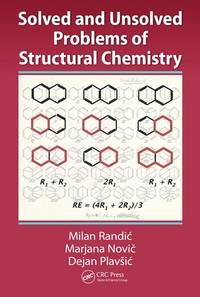
Solved and Unsolved Problems of Structural Chemistry introduces new methods and approaches for solving problems related to molecular structure. It includes numerous subjects such as aromaticity--one of the central themes of chemistry--and topics from bioinformatics such as graphical and numerical characterization of DNA, proteins, and proteomes. It also outlines the construction of novel tools using techniques from discrete mathematics, particularly graph theory, which allowed problems to be solved that many had considered unsolvable.

The book discusses a number of important problems in chemistry that have not been fully understood or fully appreciated, such as the notion of aromaticity and conjugated circuits, the generalized Hckel 4n + 2 Rule, and the nature of quantitative structure-property-activity relationships (QSARs), which have resulted in only partially solved problems and approximated solutions that are inadequate. It also describes advantages of mathematical descriptors in QSAR, including their use in screening combinatorial libraries to search for structures with high similarity to the target compounds.

Selected problems that this book addresses include:

  • Multiple regression analysis (MRA)
  • Insufficient use of partial ordering in chemistry
  • The role of Kekul valence structures
  • The problem of protein and DNA alignment

Solved and Unsolved Problems of Structural Chemistry collects results that were once scattered in scientific literature into a thoughtful and compact volume. It sheds light on numerous problems in chemistry, including ones that appeared to have been solved but were actually only partially solved. Most importantly, it shows more complete solutions as well as methods and approaches that can lead to actualization of further solutions to problems in chemistry.

About the author

Milan Randic earned his PhD from the University of Cambridge, England. He founded the Theoretical Chemistry group at the Institute Rudjer Boskovic in Zagreb, Croatia, in 1960. He joined the department of chemistry at the University of Zagreb in 1965 before leaving for the United States. He later joined the department of mathematics and computer science at Drake University, Des Moines, Iowa, until his retirement in 1999 as a distinguished professor. He has won several awards and pays annual visits to the Laboratory of Chemometrics, National Institute of Chemistry, Ljubljana, Slovenia. He is a member of the Croatian Academy of Sciences and Arts, an honorary member of the Slovenian Chemical Society, and an honorary member of the National Institute of Chemistry in Ljubljana, from which he received the Grand Pregel Award in 2010. In 2014 he reported the exact solution of the protein alignment problem, which had existed for 45 years.

Marjana Novic is head of the Laboratory of Chemometrics at the National Institute of Chemistry, Ljubljana, Slovenia, and teaches chemometrics at the University of Ljubljana, where she earned her PhD from the Faculty of Chemistry and Chemical Technology in 1985. She started her career at the National Institute of Chemistry in Ljubljana, initially developing automated information systems for infrared and NMR spectroscopy. Her expertise includes the development of chemometrics methods, QSAR and ANN modeling, structural elucidation of transmembrane segments of membrane proteins, and innovative merging of chemometrics methods with molecular modeling, which facilitates effective drug design.

Dejan Plavsic is a senior research scientist at the NMR Center at the Rudjer Boskovic Institute, Zagreb, Croatia. He earned his PhD in chemistry from the University of Zagreb. His research interests are in mathematical chemistry, chemical graph theory and its applications, metal clusters, organometallic compounds, and catalysis. Since 2003 he has been interested in extending graphical and numerical characterizations to DNA, proteins, and proteome maps using graph theoretical tools, entering thus into bioinformatics. Two of his papers in this area have received recognition as being among the 50 Most Cited Papers in Chemical Physics Letters during the 2003-2007 period. He is also one of the initial founding members of the International Academy of Mathematical Chemistry. In 2006 he was the first recipient of the International Award Latium between Europe and the Mediterranean for Medicine, Physics, or Chemistry.

tracking-