BIBLIO is the largest independent book marketplace in the world, with over 100 million books.

Skip to content

Non-Thermal Processing of Functional Foods

Non-Thermal Processing of Functional Foods

Non-Thermal Processing of Functional Foods
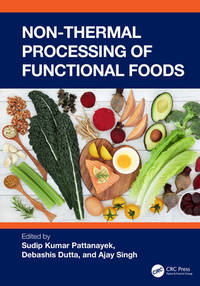
Stock photo: cover may vary

Non-Thermal Processing of Functional Foods Other -

by Sudip Kumar Pattanayek (Editor); Debashis Dutta (Editor); Ajay Singh (Editor)

Add to wish list
  • New
New

Description

. Other. New.
Ask the seller a question Add to wish list
A$304.31
A$5.78 Delivery within USA
Standard delivery: 9 to 14 days
More delivery options
Ships from Cold Books (New York, United States)

Details

  • Title Non-Thermal Processing of Functional Foods
  • Author Sudip Kumar Pattanayek (Editor); Debashis Dutta (Editor); Ajay Singh (Editor)
  • Binding Other
  • Condition New
  • Pages 326
  • Volumes 1
  • Language ENG
  • Publisher CRC Press
  • Publication date
  • Illustrated Yes
  • Features Bibliography, Illustrated
  • Bookseller's Inventory # 6401953265
  • ISBN 9781032557588 / 1032557583
  • Weight 1.76 lbs (0.80 kg)
  • Dimensions 10 x 7 x 0.75 in (25.40 x 17.78 x 1.91 cm)
  • Category Technology & Industrial Arts
  • Library of Congress subjects Food industry and trade, Food - Preservation
  • Library of Congress Catalogue Number 2024023614
  • Dewey Decimal Code 664.028
  • Quantity available 4

About Cold Books New York, United States

Biblio member since 2012

Terms of Sale: 30 day return guarantee, with full refund including shipping costs for up to 30 days after delivery if an item arrives misdescribed or damaged.

Browse books from Cold Books

Reader reviews for Non-Thermal Processing of Functional Foods

From the publisher

Functional foods, also known as nutraceuticals, began to gain prominence in the 1980s in Japan as "foods for specified health use" and became more widely recognized in the 1990s as research and interest in foods that could provide specific health benefits beyond essential nutrition grew worldwide. These foods are typically enriched with bioactive components or formulated to contain substances or live microorganisms with a possible health-enhancing or disease-preventing value and at a safe and sufficiently high concentration to achieve the intended benefit.

Usually, the added ingredients are classified as nutrients, dietary fiber, phytochemicals, other substances, or probiotics. The production, storage, and consumer consumption of these functional foods require special attention to preserve quality attributes. The production process of these foods can be classified as conventionally used thermal processing methods and non-thermal alternatives. In addition, these processes may be combined with biological approaches involving enzymatic treatment and fermentation. The various non-thermal processes, such as ultrasounds, high-hydrostatic pressure, vacuum impregnation, high-voltage electrical discharge, cold plasma, pulsed light, ozonation, etc., can be utilized for a product to sustain/preserve quality attributes of the ingredients, long shelf life, and sensory qualities.

This book compiles the latest non-thermal processing technologies to develop functional foods. The book discusses bioactivity, bioaccessibility, and bioavailability related to nutrition and functional food ingredients. It has 16 articles on different aspects of non-thermal processing technologies. Chapter 1 has discussed a general overview of emerging technologies, and various non-thermal processing techniques are discussed in Chapters 2-6, 8-9, and 12. Chapters 7, 11, 13, 15, and 16 discuss food safety and preservation. We have discussed the functional foods and bioactive compounds in Chapters 10 and 14.

A few of these reviews discuss the impact of developing non-thermal technologies on several food components (proteins, carbohydrates, lipids, minerals, vitamins, polyphenols, glucosinolates, fragrance compounds, and enzymes) while maintaining the structure and functional properties.

This book is an excellent source of information for professionals, postgraduate students, and researchers in food sciences and chemical engineering.

About the author

Sudip Kumar Pattanayek is Professor in the Department of Chemical Engineering, Indian Institute of Technology, Delhi (IITD), Hauz Khas, New Delhi, India.

Debashis Dutta is Lecturer in the Department of Food Processing Technology, Mirmadan Mohanlal Government Polytechnic, Plassey, West Bengal, India.

Ajay Singh is Assistant Professor in the Department of Food Technology, Mata Gujri College, Fatehgarh Sahib, Punjab, India.

tracking-