Home
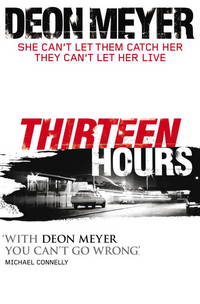
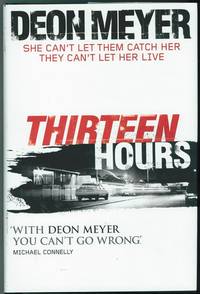
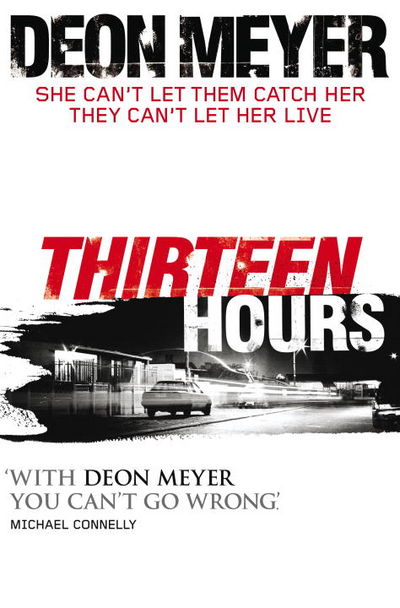
Thirteen Hours by Deon Meyer (ISBN: 9780307356642)
Stock photo: cover may vary
Reader reviews for Thirteen Hours
Write a review for this book
Important Terms and Guidelines
- Please focus on the book’s content and context. Also, add any personal comments as to how you enjoyed the book. Substantiate your likes and dislikes. You may make comparisons to other books.
- Reviews must be at least 140 characters in length.
- Please do not reveal critical plot elements.
- This is not a help line. Contact customer support if you need help.
Your review must not include:
- Obscenities, discriminatory language, or other insulting language not suitable for public domain
- Advertisements, “spam” content, or references to other products, offers or websites.
- Email addresses, URLs, phone numbers, physical addresses or other contact information.
- Overly critical comments about other reviews or reviewers
- Time-sensitive material (i.e. promotional tours, seminars, lectures, etc.)
- Availability, price, or alternative ordering/shipping information
From the publisher
DEON MEYER lives near Cape Town in South Africa with his wife and four children. Other than his family, Deon's big passions are motorcycling, music, reading, cooking and rugby. In January 2008 he retired from his day job as a consultant on brand strategy for BMW Motorrad, and is now a full-time author. Deon Meyer's books have attracted worldwide critical acclaim and a growing international fanbase. Originally written in Afrikaans, they have now been translated into several languages including English, French, German, Dutch, Italian, Spanish, Danish, Norwegian, Swedish, Russian, Finnish, Czech, Romanian, Slovakian, Bulgarian, Japanese and Polish.
Details
- Title Thirteen Hours
- Author Deon Meyer
- Binding Hardback
- Edition 1ST
- Pages 412
- Volumes 1
- Language ENG
- Publisher Random House Canada, Toronto, Ont
- Publication date 2010-04-13
- ISBN 9780307356642 / 0307356647
- Category Fiction - Espionage / Thriller
- Dewey Decimal Code FIC
Excerpt
1
05:36: a girl runs up the steep slope of Lion’s Head. The sound of her running shoes urgent on the broad footpath’s gravel.
At this moment, as the sun’s rays pick her out like a searchlight against the mountain, she is the image of carefree grace. Seen from behind, her dark plait bounces against the little rucksack. Her neck is deeply tanned against the powder blue of her T-shirt. There is energy in the rhythmic stride of her long legs in denim shorts. She personifies athletic youth – vigorous, healthy, focused.
Until she stops and looks back over her left shoulder. Then the illusion disintegrates. There is anxiety in her face. And utter exhaustion.
She does not see the impressive beauty of the city in the rising sun’s soft light. Her frightened eyes search wildly for movement in the tall fynbos shrubbery behind her. She knows they are there, but not how near. Her breath races – from exertion, shock and fear. It is adrenaline, the fearsome urge to live, that drives her to run again, to keep going, despite her aching legs, the burning in her chest, the fatigue of a night without sleep and the disorientation of a strange city, a foreign country and an impenetrable continent.
Ahead of her the path forks. Instinct spurs her to the right, higher, closer to the Lion’s rocky dome. She doesn’t think, there is no plan. She runs blindly, her arms the pistons of a machine, driving her on.
Detective Inspector Benny Griessel was asleep.
He dreamed he was driving a huge tanker on a downhill stretch of the N1 between Parow and Plattekloof. Too fast and not quite incontrol. When his cell phone rang, the first shrill note was enough to draw him back to reality with a fl eeting feeling of relief. He opened his eyes and checked the radio clock. It was 05:37.
He swung his feet off the single bed, dream forgotten. For an instant he perched motionless on the edge, like a man hovering on a cliff. Then he stood up and stumbled to the door, down the wooden stairs to the living room below, to where he had left his phone last night. His hair was unkempt, too long between trims. He wore only a pair of faded rugby shorts. His single thought was that a call at this time of the morning could only be bad news.
He didn’t recognise the number on the phone’s small screen.
‘Griessel,’ his voice betrayed him, hoarse with the first word of the day.
‘Hey, Benny, it’s Vusi. Sorry to wake you.’
He struggled to focus, his mind fuzzy. ‘That’s OK.’
‘We’ve got a . . . body.’
‘Where?’
‘St Martini, the Lutheran church up in Long Street.’
‘In the church?’
‘No, she’s lying outside.’
‘I’ll be there now.’
He ended the call and ran a hand through his hair.
She, Inspector Vusumuzi Ndabeni had said.
Probably just a bergie. Another tramp who had drunk too much of something or other. He put the phone down beside his brand new second-hand laptop.
He turned, still half asleep, and bashed his shin against the front wheel of the bicycle leaning against his pawnshop sofa. He grabbed it before it toppled. Then he went back upstairs. The bicycle was a vague reminder of his financial difficulties, but he didn’t want to dwell on that now.
In the bedroom he took off his shorts and the musky scent of sex drifted up from his midriff.
Fuck.
The knowledge of good and evil suddenly weighed heavily on him. Along with the events of the previous night, it squeezed the last remaining drowsiness from his brain. Whatever had possessed him?
He tossed the shorts in an accusatory arc onto the bed and walked through to the bathroom.
Griessel lifted the toilet lid angrily, aimed and peed.
Suddenly she was on the tar of Signal Hill Road and spotted the woman and dog a hundred metres to the left. Her mouth shaped a cry, two words, but her voice was lost in the rasping of her breath.
She ran towards the woman and her dog. It was big, a Ridgeback. The woman looked about sixty, white, with a large pink sun hat, a walking stick and a small bag on her back.
The dog was unsettled now. Maybe it smelled her fear, sensed the panic inside her. Her soles slapped on the tar as she slowed. She stopped three metres from them.
‘Help me,’ said the girl. Her accent was strong.
‘What’s wrong?’ There was concern in the woman’s eyes. She stepped back. The dog growled and strained on the lead, to get closer to the girl.
‘They’re going to kill me.’
The woman looked around in fear. ‘But there’s nobody.’
The girl looked over her shoulder. ‘They’re coming.’
Then she took the measure of the woman and dog and knew they wouldn’t make any difference. Not here on the open slope of the mountain. Not against them. She would put them all in danger.
‘Call the police. Please. Just call the police,’ she said and ran again, slowly at first, her body reluctant. The dog lunged forward and barked once. The woman pulled back on the lead.
‘But why?’
‘Please,’ she said and jogged, feet dragging, down the tar road towards Table Mountain. ‘Just call the police.’
She looked back once, about seventy paces on. The woman was still standing there bewildered, frozen to the spot.
Benny Griessel fl ushed the toilet and wondered why he hadn’t seen last night coming. He hadn’t gone looking for it, it had just happened. Jissis, he shouldn’t feel so guilty, he was only human after all.
But he was married.
If you could call it a marriage. Separate beds, separate tables and separate homes. Damn it all, Anna couldn’t have everything. She couldn’t throw him out of his own house and expect him to support two households, expect him to be sober for six fucking months, and celibate on top of that.
At least he was sober. One hundred and fifty-six days now. More than five months of struggling against the bottle, day after day, hour after hour, till now.
God, Anna must never hear about last night. Not now. Less than a month before his term of exile was served, the punishment for his drinking. If Anna found out, he was fucked, all the struggle and suffering for nothing.
He sighed and stood in front of the mirrored cabinet to brush his teeth. Had a good look at himself. Greying at the temples, wrinkles at the corner of his eyes, the Slavic features. He had never been much of an oil painting.
He opened the cabinet and took out toothbrush and toothpaste.
Whatever had she seen in him, that Bella? There had been a moment last night when he wondered if she was sleeping with him because she felt sorry for him, but he had been too aroused, too bloody grateful for her soft voice and big breasts and her mouth, jissis, that mouth, he had a thing about mouths, that’s where the trouble had started. No. It had begun with Lize Beekman, but like Anna would believe that?
Jissis.
Benny Griessel brushed his teeth hurriedly and urgently. Then he jumped under the shower and opened the taps on full, so he could wash all the accusing scents from his body.
It wasn’t a bergie. Griessel’s heart skipped a beat as he climbed over the spiked railings of the church wall and saw the girl lying there. The running shoes, khaki shorts, orange camisole and the shape of her arms and legs told him she was young. She reminded him of his daughter.
He walked down the narrow tarmac path, past tall palms and pine trees and a yellow notice board: STRICTLY AUTHORISED. CARS ONLY. AT OWNER’S OWN RISK, to the spot just left of the pretty grey church where, on the same tar, she lay stretched out.
He looked up at the perfect morning. Bright, with hardly any wind, just a faint breeze bearing fresh sea scents up the mountain. It was not a time to die.
Vusi stood beside her with Thick and Thin from Forensics, a police photographer and three men in SAPS uniform. Behind Griessel’s back on the Long Street pavement there were more uniforms, at least four in the white shirts and black epaulettes of the Metro Police, all very self-important. Together with a group of bystanders they leaned their arms on the railings and stared at the motionless figure.
‘Morning, Benny,’ said Vusi Ndabeni in his quiet manner. He was of the same average height as Griessel, but seemed smaller. Lean and neat, the seams of his trousers sharply pressed, snow-white shirt with tie, shoes shined. His peppercorn hair was cut short and shaved in sharp angles, goatee impeccably clipped. He wore surgical rubber gloves. Griessel had been introduced to him for the first time last Thursday, along with the other five detectives he had been asked to ‘mentor’ throughout the coming year. That was the word that John Africa, Regional Commissioner: Detective Services and Criminal Intelligence, had used. But when Griessel was alone in Africa’s office it was ‘We’re in the shit, Benny. We fucked up the Van der Vyver case, and now the brass say it’s because we’ve just been having too much of a good time in the Cape and it’s time to pull finger, but what can I do? I’m losing my best people and the new ones are clueless, totally green. Benny, can I count on you?’
An hour later he was in the Commissioner’s large conference room, along with six of the best ‘new’ people looking singularly unimpressed, all seated in a row on grey government-issue chairs. This time John Africa toned down his message: ‘Benny will be your mentor. He’s been on the Force for twenty-five years; he was part of the old Murder and Robbery when most of you were still in primary school. What he’s forgotten, you still have to learn. But understand this: he’s not here to do your work for you. He’s your advisor, your sounding board. And your mentor. According to the dictionary that is,’ the Commissioner glanced at his notes, ‘. . . a wise and trusted counsellor or teacher. That’s why I transferred him to the Provincial Task Force. Because Benny is wise and you can trust him, because I trust him. Too much knowledge is being lost, there are too many new people and we don’t have to reinvent the wheel every time. Learn from him. You have been hand picked – not many will get this opportunity.’ Griessel watched their faces. Four lean black men, one fat black woman, and one broad-shouldered coloured detective, all in their early thirties. There was not much ungrudging gratitude, with the exception of Vusumuzi (‘but everyone calls me Vusi’) Ndabeni. The coloured detective, Fransman Dekker, was openly antagonistic. But Griessel was already accustomed to the undercurrents in the new SAPS. He stood beside John Africa and told himself he ought to be grateful he still had a job after the dissolution of the Serious and Violent Crimes Unit. Grateful that he and his former commanding officer, Mat Joubert, hadn’t been posted to a station like most of their colleagues. The new structures that were not new, it was like it was thirty years back, detectives at stations, because that was the way it was now done overseas, and the SAPS must copy them. At least he still had work and Joubert had put him up for promotion. If his luck held, if they could look past his history of drinking, and affirmative action and all the politics and shit, he would hear today whether he had made Captain.
Captain Benny Griessel. It sounded right to him. He needed the raise too.
Badly.
‘Morning, Vusi,’ he said.
‘Hey, Benny,’ Jimmy, the tall, skinny white coat from Forensics, greeted him. ‘I hear they call you “The Oracle” now.’
‘Like that aunty in Lord of the Rings,’ said Arnold, the short, fat one. Collectively they were known in Cape police circles as Thick and Thin, usually in the tired crack ‘Forensics will stand by you through Thick and Thin.’
‘The Matrix, you ape,’ said Jimmy.
‘Whatever,’ said Arnold.
‘Morning,’ said Griessel. He turned to the uniforms under the tree and took a deep breath, ready to tell them, ‘This is a crime scene, get your butts to the other side of the wall,’ and then he remembered that this was Vusi’s case, he should shut up and mentor. He gave the uniforms a dirty look, with zero effect, and hunkered down to look at the body.
The girl lay on her belly with her head turned away from the street. Her blonde hair was very short. Across her back were two short horizontal cuts, matching left and right on her shoulder blades. But these were not the cause of death. That was the huge gash across her throat, deep enough to expose the oesophagus. Her face, chest and shoulders lay in the wide pool of blood. The smell of death was already there, as bitter as copper.
‘Jissis,’ said Griessel, all his fear and revulsion welling up in him and he had to breathe, slow and easy, as Doc Barkhuizen had taught him. He had to distance himself, he must not internalise this.
He shut his eyes for a second. Then he looked up at the trees. He was searching for objectivity, but this was a dreadful way to die. And his mind wanted to spool through the event as it had happened, the knife fl ashing and slicing, sliding deep through her tissues.
He got up quickly, pretending to look around. Thick and Thin were bickering over something, as usual. He tried to listen.
Lord, she looked so young. Eighteen, nineteen?
What kind of madness did it take to cut the throat of a child like this? What kind of perversion?
He forced the images out of his mind, thought of the facts, the implications. She was white. That spelled trouble. That meant media attention and the whole cycle of crime-getting-out-of-control criticism starting all over again. It meant huge pressure and long hours, too many people with a finger in the pie and everyone trying to cover their ass and he didn’t have the heart for all that any more.
‘Trouble,’ he said quietly to Vusi.
‘I know.’
‘It would be better if the uniforms stayed behind the wall.’
Ndabeni nodded and went over to the uniformed policemen. He asked them to go out another way, around the back of the church. They were reluctant, wanting to be part of the action. But they went.
Vusi came to stand beside him, notebook and pen in hand. ‘All the gates are locked. There’s a gate for cars over there near the church office, and the main gate in front of the building here. She must have jumped over the railings – it’s the only way in here.’ Vusi spoke too fast. He pointed at a coloured man standing on the pavement on the other side of the wall. ‘That ou there . . . James Dylan Fredericks, he found her. He’s the day manager of Kauai Health Foods in Kloof Street. He says he comes in on the Golden Arrow bus from Mitchell’s Plain and then he walks from the terminal. He went past here and something caught his eye. So he climbed over the wall, but when he saw the blood he went back and phoned the Caledon Square station because that’s the number he has on speed dial for the shop.’
Griessel nodded. He suspected Ndabeni was nervous about his presence, as though he were here to evaluate the black man. He would have to put that right.
‘I’m going to tell Fredericks he can go, we know where to find him.’
‘That’s fine, Vusi. You don’t have to . . . I appreciate you giving me the details, but I don’t want you to . . . you know . . .’
Ndabeni touched Griessel’s arm as though to reassure him. ‘It’s OK, Benny. I want to learn . . .’
Vusi was silent for a while. Then he added: ‘I don’t want to blow this, Benny. I was in Khayelitsha for four years and I don’t want to go back. But this is my first . . . white,’ he said that carefully as if it might be a racist statement. ‘This is another world . . .’
‘It is.’ Griessel was no good at this sort of thing, never knowing what the proper, politically correct words were.
Vusi came to his rescue. ‘I tried to check if there was anything in her shorts pockets. For ID. There isn’t anything. We’re just waiting for the pathologist now.’
A bird twittered shrilly in the trees. Two pigeons landed near them and began peck-pecking. Griessel looked around him. There was one vehicle in the church grounds, a white Toyota Microbus standing on the south side against a two-metre brick wall. ‘Adventure’ was spelled in big red letters along the side of the vehicle.
Ndabeni followed his gaze. ‘They probably park here for security,’ and he indicated the high wall and locked gates. ‘I think they have an office down in Long Street.’
‘Could be.’ Long Street was the hub of backpacker tourism in the Cape – young people, students from Europe, Australia and America looking for cheap lodgings and adventure.
Griessel squatted down beside the body again, but this time so that her face was turned away from him. He did not want to look at the dreadful wound, or her delicate features.
Please, don’t let her be a foreign kid, he thought.
Things would really get out of hand then.
05:36: a girl runs up the steep slope of Lion’s Head. The sound of her running shoes urgent on the broad footpath’s gravel.
At this moment, as the sun’s rays pick her out like a searchlight against the mountain, she is the image of carefree grace. Seen from behind, her dark plait bounces against the little rucksack. Her neck is deeply tanned against the powder blue of her T-shirt. There is energy in the rhythmic stride of her long legs in denim shorts. She personifies athletic youth – vigorous, healthy, focused.
Until she stops and looks back over her left shoulder. Then the illusion disintegrates. There is anxiety in her face. And utter exhaustion.
She does not see the impressive beauty of the city in the rising sun’s soft light. Her frightened eyes search wildly for movement in the tall fynbos shrubbery behind her. She knows they are there, but not how near. Her breath races – from exertion, shock and fear. It is adrenaline, the fearsome urge to live, that drives her to run again, to keep going, despite her aching legs, the burning in her chest, the fatigue of a night without sleep and the disorientation of a strange city, a foreign country and an impenetrable continent.
Ahead of her the path forks. Instinct spurs her to the right, higher, closer to the Lion’s rocky dome. She doesn’t think, there is no plan. She runs blindly, her arms the pistons of a machine, driving her on.
Detective Inspector Benny Griessel was asleep.
He dreamed he was driving a huge tanker on a downhill stretch of the N1 between Parow and Plattekloof. Too fast and not quite incontrol. When his cell phone rang, the first shrill note was enough to draw him back to reality with a fl eeting feeling of relief. He opened his eyes and checked the radio clock. It was 05:37.
He swung his feet off the single bed, dream forgotten. For an instant he perched motionless on the edge, like a man hovering on a cliff. Then he stood up and stumbled to the door, down the wooden stairs to the living room below, to where he had left his phone last night. His hair was unkempt, too long between trims. He wore only a pair of faded rugby shorts. His single thought was that a call at this time of the morning could only be bad news.
He didn’t recognise the number on the phone’s small screen.
‘Griessel,’ his voice betrayed him, hoarse with the first word of the day.
‘Hey, Benny, it’s Vusi. Sorry to wake you.’
He struggled to focus, his mind fuzzy. ‘That’s OK.’
‘We’ve got a . . . body.’
‘Where?’
‘St Martini, the Lutheran church up in Long Street.’
‘In the church?’
‘No, she’s lying outside.’
‘I’ll be there now.’
He ended the call and ran a hand through his hair.
She, Inspector Vusumuzi Ndabeni had said.
Probably just a bergie. Another tramp who had drunk too much of something or other. He put the phone down beside his brand new second-hand laptop.
He turned, still half asleep, and bashed his shin against the front wheel of the bicycle leaning against his pawnshop sofa. He grabbed it before it toppled. Then he went back upstairs. The bicycle was a vague reminder of his financial difficulties, but he didn’t want to dwell on that now.
In the bedroom he took off his shorts and the musky scent of sex drifted up from his midriff.
Fuck.
The knowledge of good and evil suddenly weighed heavily on him. Along with the events of the previous night, it squeezed the last remaining drowsiness from his brain. Whatever had possessed him?
He tossed the shorts in an accusatory arc onto the bed and walked through to the bathroom.
Griessel lifted the toilet lid angrily, aimed and peed.
Suddenly she was on the tar of Signal Hill Road and spotted the woman and dog a hundred metres to the left. Her mouth shaped a cry, two words, but her voice was lost in the rasping of her breath.
She ran towards the woman and her dog. It was big, a Ridgeback. The woman looked about sixty, white, with a large pink sun hat, a walking stick and a small bag on her back.
The dog was unsettled now. Maybe it smelled her fear, sensed the panic inside her. Her soles slapped on the tar as she slowed. She stopped three metres from them.
‘Help me,’ said the girl. Her accent was strong.
‘What’s wrong?’ There was concern in the woman’s eyes. She stepped back. The dog growled and strained on the lead, to get closer to the girl.
‘They’re going to kill me.’
The woman looked around in fear. ‘But there’s nobody.’
The girl looked over her shoulder. ‘They’re coming.’
Then she took the measure of the woman and dog and knew they wouldn’t make any difference. Not here on the open slope of the mountain. Not against them. She would put them all in danger.
‘Call the police. Please. Just call the police,’ she said and ran again, slowly at first, her body reluctant. The dog lunged forward and barked once. The woman pulled back on the lead.
‘But why?’
‘Please,’ she said and jogged, feet dragging, down the tar road towards Table Mountain. ‘Just call the police.’
She looked back once, about seventy paces on. The woman was still standing there bewildered, frozen to the spot.
Benny Griessel fl ushed the toilet and wondered why he hadn’t seen last night coming. He hadn’t gone looking for it, it had just happened. Jissis, he shouldn’t feel so guilty, he was only human after all.
But he was married.
If you could call it a marriage. Separate beds, separate tables and separate homes. Damn it all, Anna couldn’t have everything. She couldn’t throw him out of his own house and expect him to support two households, expect him to be sober for six fucking months, and celibate on top of that.
At least he was sober. One hundred and fifty-six days now. More than five months of struggling against the bottle, day after day, hour after hour, till now.
God, Anna must never hear about last night. Not now. Less than a month before his term of exile was served, the punishment for his drinking. If Anna found out, he was fucked, all the struggle and suffering for nothing.
He sighed and stood in front of the mirrored cabinet to brush his teeth. Had a good look at himself. Greying at the temples, wrinkles at the corner of his eyes, the Slavic features. He had never been much of an oil painting.
He opened the cabinet and took out toothbrush and toothpaste.
Whatever had she seen in him, that Bella? There had been a moment last night when he wondered if she was sleeping with him because she felt sorry for him, but he had been too aroused, too bloody grateful for her soft voice and big breasts and her mouth, jissis, that mouth, he had a thing about mouths, that’s where the trouble had started. No. It had begun with Lize Beekman, but like Anna would believe that?
Jissis.
Benny Griessel brushed his teeth hurriedly and urgently. Then he jumped under the shower and opened the taps on full, so he could wash all the accusing scents from his body.
It wasn’t a bergie. Griessel’s heart skipped a beat as he climbed over the spiked railings of the church wall and saw the girl lying there. The running shoes, khaki shorts, orange camisole and the shape of her arms and legs told him she was young. She reminded him of his daughter.
He walked down the narrow tarmac path, past tall palms and pine trees and a yellow notice board: STRICTLY AUTHORISED. CARS ONLY. AT OWNER’S OWN RISK, to the spot just left of the pretty grey church where, on the same tar, she lay stretched out.
He looked up at the perfect morning. Bright, with hardly any wind, just a faint breeze bearing fresh sea scents up the mountain. It was not a time to die.
Vusi stood beside her with Thick and Thin from Forensics, a police photographer and three men in SAPS uniform. Behind Griessel’s back on the Long Street pavement there were more uniforms, at least four in the white shirts and black epaulettes of the Metro Police, all very self-important. Together with a group of bystanders they leaned their arms on the railings and stared at the motionless figure.
‘Morning, Benny,’ said Vusi Ndabeni in his quiet manner. He was of the same average height as Griessel, but seemed smaller. Lean and neat, the seams of his trousers sharply pressed, snow-white shirt with tie, shoes shined. His peppercorn hair was cut short and shaved in sharp angles, goatee impeccably clipped. He wore surgical rubber gloves. Griessel had been introduced to him for the first time last Thursday, along with the other five detectives he had been asked to ‘mentor’ throughout the coming year. That was the word that John Africa, Regional Commissioner: Detective Services and Criminal Intelligence, had used. But when Griessel was alone in Africa’s office it was ‘We’re in the shit, Benny. We fucked up the Van der Vyver case, and now the brass say it’s because we’ve just been having too much of a good time in the Cape and it’s time to pull finger, but what can I do? I’m losing my best people and the new ones are clueless, totally green. Benny, can I count on you?’
An hour later he was in the Commissioner’s large conference room, along with six of the best ‘new’ people looking singularly unimpressed, all seated in a row on grey government-issue chairs. This time John Africa toned down his message: ‘Benny will be your mentor. He’s been on the Force for twenty-five years; he was part of the old Murder and Robbery when most of you were still in primary school. What he’s forgotten, you still have to learn. But understand this: he’s not here to do your work for you. He’s your advisor, your sounding board. And your mentor. According to the dictionary that is,’ the Commissioner glanced at his notes, ‘. . . a wise and trusted counsellor or teacher. That’s why I transferred him to the Provincial Task Force. Because Benny is wise and you can trust him, because I trust him. Too much knowledge is being lost, there are too many new people and we don’t have to reinvent the wheel every time. Learn from him. You have been hand picked – not many will get this opportunity.’ Griessel watched their faces. Four lean black men, one fat black woman, and one broad-shouldered coloured detective, all in their early thirties. There was not much ungrudging gratitude, with the exception of Vusumuzi (‘but everyone calls me Vusi’) Ndabeni. The coloured detective, Fransman Dekker, was openly antagonistic. But Griessel was already accustomed to the undercurrents in the new SAPS. He stood beside John Africa and told himself he ought to be grateful he still had a job after the dissolution of the Serious and Violent Crimes Unit. Grateful that he and his former commanding officer, Mat Joubert, hadn’t been posted to a station like most of their colleagues. The new structures that were not new, it was like it was thirty years back, detectives at stations, because that was the way it was now done overseas, and the SAPS must copy them. At least he still had work and Joubert had put him up for promotion. If his luck held, if they could look past his history of drinking, and affirmative action and all the politics and shit, he would hear today whether he had made Captain.
Captain Benny Griessel. It sounded right to him. He needed the raise too.
Badly.
‘Morning, Vusi,’ he said.
‘Hey, Benny,’ Jimmy, the tall, skinny white coat from Forensics, greeted him. ‘I hear they call you “The Oracle” now.’
‘Like that aunty in Lord of the Rings,’ said Arnold, the short, fat one. Collectively they were known in Cape police circles as Thick and Thin, usually in the tired crack ‘Forensics will stand by you through Thick and Thin.’
‘The Matrix, you ape,’ said Jimmy.
‘Whatever,’ said Arnold.
‘Morning,’ said Griessel. He turned to the uniforms under the tree and took a deep breath, ready to tell them, ‘This is a crime scene, get your butts to the other side of the wall,’ and then he remembered that this was Vusi’s case, he should shut up and mentor. He gave the uniforms a dirty look, with zero effect, and hunkered down to look at the body.
The girl lay on her belly with her head turned away from the street. Her blonde hair was very short. Across her back were two short horizontal cuts, matching left and right on her shoulder blades. But these were not the cause of death. That was the huge gash across her throat, deep enough to expose the oesophagus. Her face, chest and shoulders lay in the wide pool of blood. The smell of death was already there, as bitter as copper.
‘Jissis,’ said Griessel, all his fear and revulsion welling up in him and he had to breathe, slow and easy, as Doc Barkhuizen had taught him. He had to distance himself, he must not internalise this.
He shut his eyes for a second. Then he looked up at the trees. He was searching for objectivity, but this was a dreadful way to die. And his mind wanted to spool through the event as it had happened, the knife fl ashing and slicing, sliding deep through her tissues.
He got up quickly, pretending to look around. Thick and Thin were bickering over something, as usual. He tried to listen.
Lord, she looked so young. Eighteen, nineteen?
What kind of madness did it take to cut the throat of a child like this? What kind of perversion?
He forced the images out of his mind, thought of the facts, the implications. She was white. That spelled trouble. That meant media attention and the whole cycle of crime-getting-out-of-control criticism starting all over again. It meant huge pressure and long hours, too many people with a finger in the pie and everyone trying to cover their ass and he didn’t have the heart for all that any more.
‘Trouble,’ he said quietly to Vusi.
‘I know.’
‘It would be better if the uniforms stayed behind the wall.’
Ndabeni nodded and went over to the uniformed policemen. He asked them to go out another way, around the back of the church. They were reluctant, wanting to be part of the action. But they went.
Vusi came to stand beside him, notebook and pen in hand. ‘All the gates are locked. There’s a gate for cars over there near the church office, and the main gate in front of the building here. She must have jumped over the railings – it’s the only way in here.’ Vusi spoke too fast. He pointed at a coloured man standing on the pavement on the other side of the wall. ‘That ou there . . . James Dylan Fredericks, he found her. He’s the day manager of Kauai Health Foods in Kloof Street. He says he comes in on the Golden Arrow bus from Mitchell’s Plain and then he walks from the terminal. He went past here and something caught his eye. So he climbed over the wall, but when he saw the blood he went back and phoned the Caledon Square station because that’s the number he has on speed dial for the shop.’
Griessel nodded. He suspected Ndabeni was nervous about his presence, as though he were here to evaluate the black man. He would have to put that right.
‘I’m going to tell Fredericks he can go, we know where to find him.’
‘That’s fine, Vusi. You don’t have to . . . I appreciate you giving me the details, but I don’t want you to . . . you know . . .’
Ndabeni touched Griessel’s arm as though to reassure him. ‘It’s OK, Benny. I want to learn . . .’
Vusi was silent for a while. Then he added: ‘I don’t want to blow this, Benny. I was in Khayelitsha for four years and I don’t want to go back. But this is my first . . . white,’ he said that carefully as if it might be a racist statement. ‘This is another world . . .’
‘It is.’ Griessel was no good at this sort of thing, never knowing what the proper, politically correct words were.
Vusi came to his rescue. ‘I tried to check if there was anything in her shorts pockets. For ID. There isn’t anything. We’re just waiting for the pathologist now.’
A bird twittered shrilly in the trees. Two pigeons landed near them and began peck-pecking. Griessel looked around him. There was one vehicle in the church grounds, a white Toyota Microbus standing on the south side against a two-metre brick wall. ‘Adventure’ was spelled in big red letters along the side of the vehicle.
Ndabeni followed his gaze. ‘They probably park here for security,’ and he indicated the high wall and locked gates. ‘I think they have an office down in Long Street.’
‘Could be.’ Long Street was the hub of backpacker tourism in the Cape – young people, students from Europe, Australia and America looking for cheap lodgings and adventure.
Griessel squatted down beside the body again, but this time so that her face was turned away from him. He did not want to look at the dreadful wound, or her delicate features.
Please, don’t let her be a foreign kid, he thought.
Things would really get out of hand then.
Media reviews
“Try picking up Thirteen Hours and setting it down. Try. You can’t do it. I’m a pro, and I couldn’t do it.”
—Don Winslow, author of The Power of the Dog and Satori
“Bestselling South African novelist Meyer delivers another exciting if brutally violent crime novel.”
—Joanne Wilkinson, Atlantic Monthly (starred review)
“Outstanding . . . edge-of-the-seat suspense.”
—The Sunday Times
“Deon Meyer is one of the unsung masters. Thirteen Hours proves he should be on everyone’s reading list. This book is great!”
—Michael Connelly
“Thirteen Hours is Cape Town today, with all its exquisite beauty, tribal conflicts, loyalties and corruptions.”
—The Globe and Mail
“Meyer is brilliant at suspense, a skill that is coupled with beguilingly unabashed social commentary.”
—The Sunday Times
"Deon Meyer is...one of the sharpest and most perceptive thriller writers around."
—The Times
"If you want a glimpse of the soul of the new South Africa in all its glory, and with all the gory details of its problems and corruption, Meyer is your man."
—The Guardian
"A heart-pumping yarn in an exotic locale."
—Winnipeg Free Press
"There have been other South African crime novelists, but none are as deft at place as Deon Meyer. . . . Meyer weaves all this into a tightly plotted story--with a twist that works beautifully--and unforgettable characters."
—Margaret Cannon, The Globe and Mail
—Don Winslow, author of The Power of the Dog and Satori
“Bestselling South African novelist Meyer delivers another exciting if brutally violent crime novel.”
—Joanne Wilkinson, Atlantic Monthly (starred review)
“Outstanding . . . edge-of-the-seat suspense.”
—The Sunday Times
“Deon Meyer is one of the unsung masters. Thirteen Hours proves he should be on everyone’s reading list. This book is great!”
—Michael Connelly
“Thirteen Hours is Cape Town today, with all its exquisite beauty, tribal conflicts, loyalties and corruptions.”
—The Globe and Mail
“Meyer is brilliant at suspense, a skill that is coupled with beguilingly unabashed social commentary.”
—The Sunday Times
"Deon Meyer is...one of the sharpest and most perceptive thriller writers around."
—The Times
"If you want a glimpse of the soul of the new South Africa in all its glory, and with all the gory details of its problems and corruption, Meyer is your man."
—The Guardian
"A heart-pumping yarn in an exotic locale."
—Winnipeg Free Press
"There have been other South African crime novelists, but none are as deft at place as Deon Meyer. . . . Meyer weaves all this into a tightly plotted story--with a twist that works beautifully--and unforgettable characters."
—Margaret Cannon, The Globe and Mail
About the author
DEON MEYER lives near Cape Town in South Africa with his wife and four children. Other than his family, Deon's big passions are motorcycling, music, reading, cooking and rugby. In January 2008 he retired from his day job as a consultant on brand strategy for BMW Motorrad, and is now a full-time author. Deon Meyer's books have attracted worldwide critical acclaim and a growing international fanbase. Originally written in Afrikaans, they have now been translated into several languages including English, French, German, Dutch, Italian, Spanish, Danish, Norwegian, Swedish, Russian, Finnish, Czech, Romanian, Slovakian, Bulgarian, Japanese and Polish.
Customers who bought Thirteen Hours also bought…
More Copies for Sale
Stock photo: cover may vary
Thirteen Hours
by Meyer, Deon
- Used
- Condition
- Used
- ISBN 10 / ISBN 13
- 9780307356642 / 0307356647
- Quantity available
- 1
- Seller
- Item price
-
A$16.80Free Delivery to USA
Show details
Description:
Used - Very Good. Former library copy. Pages intact with possible writing/highlighting. Binding strong with minor wear. Dust jackets/supplements may not be included. Includes library markings. Stock photo provided. Product includes identifying sticker. Better World Books: Buy Books. Do Good.
Stock photo: cover may vary
Thirteen Hours
by Meyer, Deon; translated from Afrikaans by K.L. Seegers
- Used
- Very good
- Hardback
- first
- Condition
- Very good
- Edition
- Canadian First
- Binding
- Hardcover
- ISBN 10 / ISBN 13
- 9780307356642 / 0307356647
- Quantity available
- 1
- Seller
- Item price
-
A$22.05Free Delivery to USA
Show details
Description:
Toronto, Ontario: Random House Canada, 2010. Book. Very Good. Hardcover. Canadian First. Complete number line from 1 to 10; some edge wear to boards and dust jacket; otherwise a solid, clean copy with no marking or underlining; collectible condition..
Thirteen Hours
by Meyer, Deon; K.L. Seegers (translator)
- Used
- Hardback
- first
- Condition
- Near Fine in Very Good+ dust jacket
- Edition
- First Edition; First Printing
- Binding
- Hardcover
- ISBN 10 / ISBN 13
- 9780307356642 / 0307356647
- Quantity available
- 1
- Seller
- Item price
-
A$29.40A$22.05 Delivery to USA
Show details
Description:
Toronto: Random House Canada. Near Fine in Very Good+ dust jacket. 2010. First Edition; First Printing. Hardcover. Ballpoint date written bottom page edges, light creasing of dust jacket.; A bright, solid book, DJ in protective Mylar sleeve, unclipped.; 1.3 x 9.1 x 6.2 Inches; 416 pages; Some would call Detective Benny Griessel a legend. Others would call him a drunk. Either way, he has trodden on too many toes over the years ever to reach the top of the promotion ladder, and now he concentrates on staying sober and mentoring the new generation of crime fighters â mixed race, Xhosa and Zulu. But when an American backpacker disappears in Cape Town, panicked politicians know who to call: Benny has just thirteen hours to save the girl, save his career, and crack open a conspiracy, which threatens the whole country. A potent, suspenseful thriller, and a brilliant portrait of life in the country that will host the 2010 World Cup. . 0307356647 .
Thirteen Hours: Signed
by Meyer, Deon
- Used
- Fine
- Hardback
- Signed
- first
- Condition
- Excellent
- Edition
- 1ST
- Binding
- Hardcover
- ISBN 10 / ISBN 13
- 9780307356642 / 0307356647
- Quantity available
- 1
- Seller
- Item price
-
A$95.55A$11.02 Delivery to USA
Show details
Description:
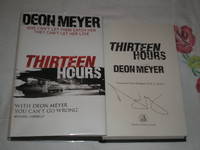
U.S.A.: Random House Canada, 2010. Book. Fine. Hardcover. Signed by Author(s). 1ST. An Outstanding Copy - Signed By The Author On The Title Page. Signature Only. A First Edition, First Printing. Book Is In Fine Condition. Boards Are Clean, Not Bumped. Fore Edges Are Clean. Interior Is Clean And Legible. Not Remaindered. Dust Jacket Is In Fine Condition. Not Chipped Or Crinkled. Not Price Clipped. Dust Jacket Is Covered By Mylar Brodart. Thanks And Enjoy..
Book Conditions Explained
Biblio’s Book Conditions
-
As NewThe book is pristine and free of any defects, in the same condition as when it was first newly published.
-
Fine (F)A book in fine condition exhibits no flaws. A fine condition book closely approaches As New condition, but may lack the crispness of an uncirculated, unopened volume.
-
Near Fine (NrFine or NF)Almost perfect, but not quite fine. Any defect outside of shelf-wear should be noted.
-
Very Good (VG)A used book that does show some small signs of wear - but no tears - on either binding or paper. Very good items should not have writing or highlighting.
-
Good (G or Gd.)The average used and worn book that has all pages or leaves present. ‘Good’ items often include writing and highlighting and may be ex-library. Any defects should be noted. The oft-repeated aphorism in the book collecting world is “good isn’t very good.”
-
FairIt is best to assume that a “fair” book is in rough shape but still readable.
-
Poor (P)A book with significant wear and faults. A poor condition book can still make a good reading copy but is generally not collectible unless the item is very scarce. Any missing pages must be specifically noted.