From the publisher
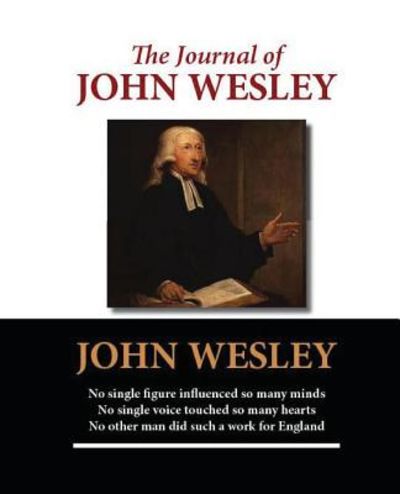
John Wesley (1703-1791) was a Church of England cleric and theologian who, through open-air preaching with his brother Charles, founded the Methodist movement. He added to his Journal on a daily basis, and it constitutes 26 volumes in entirety. An author, evangelist, preacher, organizer, theologian, and pietist, Wesley is arguably one of the most important Christian voices of the 18th century. Christians continue to be influenced by him nearly three centuries later. He was a founder of the Methodist movement, and was used by God to spread the gospel to countless souls. The Journal of John Wesley is composed of 50 years of Wesley's reflections. These writings offer a first person view of the thoughts, feelings, and prayers of a man whose intelligence and organizational skills were only surpassed by his enthusiasm for spreading the gospel of Jesus Christ. Of his thoughts during a storm while returning to England from America, he admits he thought, "I went to America to convert the Indians; but oh! who shall convert me? who, what is he that will deliver me from this evil heart of mischief?... in a storm I think, 'What, if the gospel be not true? Then thou art of all men most foolish. For what hast thou given thy goods, thine ease, thy friends, thy reputation, thy country, thy life?... A dream! a cunningly devised fable!'" He also wrote, "God in Scripture commands me... to instruct the ignorant, reform the wicked, confirm the virtuous. Man forbids me to do this in another's parish; that is, in effect, to do it at all, seeing I have now no parish of my own, nor probably ever shall. Whom then shall I hear, God or man? ... I look upon all the world as my parish..." In another passage, he recalled, "As we were riding through a village called Sticklepath, one stopped me in the street and asked abruptly, 'Is not thy name John Wesley?' Immediately two or three more came up and told me I must stop there... I found they were called Quakers: but that hurt not me, seeing the love of God was in their hearts." He also notes, wryly, "It is now about eighteen years since I began writing and printing books; and how much in that time have I gained by printing? ... I had gained by printing and preaching together a debt of twelve hundred and thirty-six pounds." He reasons, "The danger was to regard extraordinary circumstances too much, such as outcries, convulsions, visions, trances; as if these were essential to the inward work, so that it could not go on without them. Perhaps the danger is, to regard them too little; to condemn them altogether; to imagine they had nothing of God in them." John Wesley's Journal is one of the great spiritual "classics"; and this collection contains a broad selection of them.
About the author
John Wesley (1703-1791) was an Anglican cleric and Christian theologian. Wesley is largely credited, along with his brother Charles Wesley, as founding the Methodist movement which began when he took to open-air preaching in a similar manner to George Whitefield. In contrast to George Whitefield's Calvinism, Wesley embraced the Arminian doctrines that were dominant in the 18th-century Church of England. Methodism in both forms was a highly successful evangelical movement in the United Kingdom, which encouraged people to experience Jesus Christ personally. Wesley's teachings, known as Wesleyanism, provided the seeds for the modern Methodist movement, the Holiness movement, Pentecostalism, the Charismatic Movement, and Neo-charismatic churches, which encompass numerous denominations across the world. In addition, he refined Arminianism with a strong evangelical emphasis on the Reformed doctrine of justification by faith.